Block Paving Explained: Patterns, Common Problems and How to Make It Last
A plain-English guide from a family-run Cardiff paving team to choosing patterns, avoiding the common problems and getting decades out of your driveway.
Block paving is one of the most popular choices for driveways and patios across Cardiff and the Vale of Glamorgan, and it is easy to see why. It looks smart, it copes well with cars and daily foot traffic, and if a section ever gets damaged you can lift and relay it rather than starting from scratch.
In this guide we explain the common laying patterns, how long block paving really lasts, and the problems we get asked about most: sinking, weeds, sealing and cleaning. We keep it plain and practical so you know what to expect before you spend any money.
We are Driveways and Paving Cardiff, a family-run firm established in 1990 with 35 years of experience laying block paving, patios and driveways across South Wales. If you want an exact price for your property, we offer free no-obligation site visits and written quotes.
What are the most popular block paving patterns, and which is strongest for a driveway?
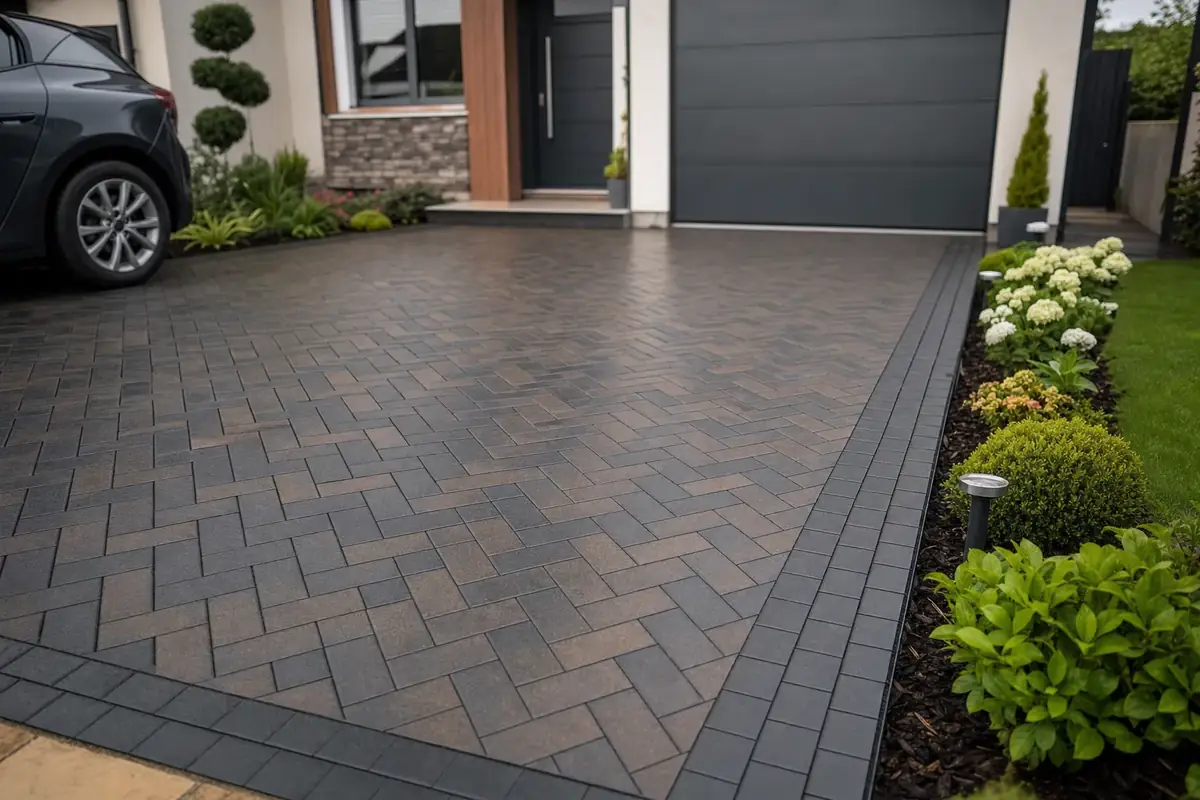
The most popular block paving patterns are herringbone, basketweave, stretcher bond and stacked bond. Herringbone, laid at 45 or 90 degrees, is the strongest for a driveway because it locks the blocks together and spreads the weight of vehicles, which stops them shifting under load.
Herringbone is the go-to for driveways because the interlocking zig-zag stops blocks creeping when a car brakes, turns or sits still for hours. Laid at 45 degrees it handles turning and braking forces slightly better than the 90 degree version, though both are strong. It is the pattern we lay most often on driveways in Cardiff, Barry and Penarth.
Basketweave and stretcher bond, where blocks sit in a simple offset like a brick wall, look smart on patios and paths but are better suited to lighter foot traffic than to heavy vehicles. Stacked bond, with joints lined up in a grid, is the weakest under load and is really a decorative choice for small areas.
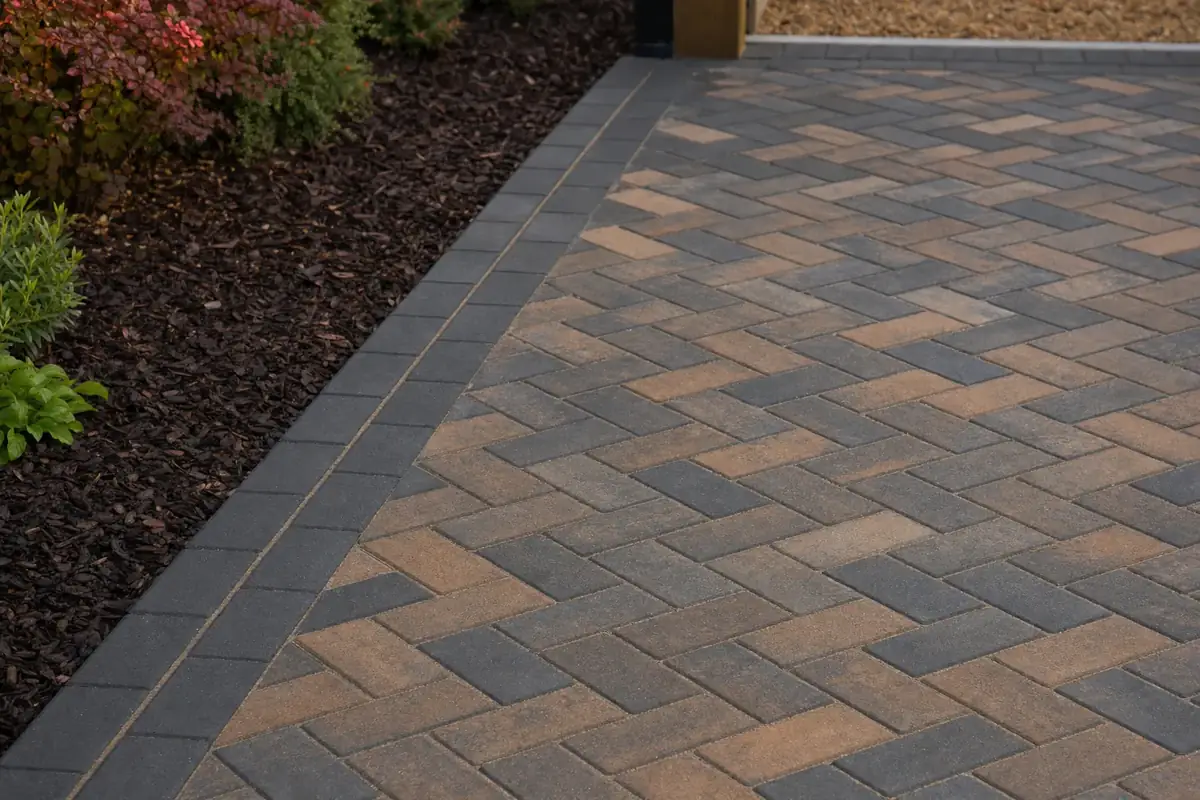
Whatever the field pattern, a driveway wants a strong edge. A soldier course, which is a row of blocks stood end to end around the perimeter, along with solid concrete haunching, holds everything in place. Without a proper edge restraint even herringbone will spread and drop at the sides over time.
For a driveway that takes a car every day, our advice is nearly always herringbone with a contrasting double border. It is the combination that lasts, and it still gives you plenty of colour choices, from charcoal and brindle through to buff.
Which block paving pattern is best for a patio?
For a patio that only takes foot traffic and garden furniture, basketweave and stretcher bond both look good and are perfectly strong enough. You have more freedom on a patio than a driveway because there is no vehicle load, so you can choose the pattern you like the look of. Our patio installations often pair a running bond field with a neat border to frame the space.
What is a soldier course?
A soldier course is a line of blocks laid end to end, standing along the edge of the paving, usually in a contrasting colour. It frames the driveway and, backed by concrete haunching, stops the blocks spreading sideways under traffic. Almost every well-built block paving driveway has one.
How long does block paving last?
Well-laid block paving typically lasts around 20 to 40 years or more, and the individual blocks can last far longer because they are relaid rather than thrown away. Lifespan depends far more on the quality of the groundwork beneath than on the blocks themselves.
The blocks are the part you see, but the part that decides how long your driveway lasts is what sits underneath: a well-compacted sub-base, the right depth of laying course and proper drainage. Get that right and block paving comfortably reaches 20 to 40 years. Get it wrong and it can start moving within a couple of winters.
Concrete block paving generally gives around 20 to 30 years of good service, while clay pavers, which hold their colour better, often go beyond that. Because blocks are laid on sand rather than glued down, a good installer can lift the affected area, correct the base and relay the same blocks, so the surface can be refreshed many times over its life.
Local ground matters here. Much of Cardiff and the Vale of Glamorgan sits on clay-rich soils that shrink in dry spells and swell when wet. Add the high rainfall South Wales gets and you have ground that moves, so a deep, well-drained base is not a luxury, it is what keeps the paving flat for decades.
A little upkeep goes a long way too. Keeping joints filled with kiln-dried sand, clearing weeds early and re-sanding after a wash all add years. We back our block paving with a 25-year workmanship guarantee, and we are fully insured, so the base is built to last, not just the surface on top.
Does block paving last longer than tarmac or resin?
Each surface has its place. Block paving and resin bound driveways both last well when installed properly, often 20 years or more, while tarmac driveways tend to need resurfacing sooner but cost less up front. The big advantage of block paving is that damaged areas can be lifted and relaid without redoing the whole drive.
Why does block paving sink, lift or become uneven?
Block paving sinks, lifts or goes uneven mainly because of a weak or poorly compacted sub-base, poor drainage, or ground movement in clay soil. Tree roots, sand washing out of the joints and heavy vehicles on an under-built base are the other common causes.
Nine times out of ten, uneven block paving comes back to the base. If the sub-base was too shallow, not compacted properly or laid without adequate drainage, water gets in, washes the fines away and the surface starts to dip and rock. Heavy vehicles then speed the problem up.
Local ground plays its part. On the clay-rich soils common across Cardiff and the Vale, the ground swells and shrinks with the seasons, which can lift or drop areas of paving if the base was not built to cope. Tree roots nearby can push blocks up, and blocked or missing drainage lets South Wales rain sit under the surface where it does damage.
Joints matter more than people think. When the kiln-dried sand between blocks washes out, the blocks lose their interlock and start to wobble and creep, especially near edges without a proper soldier course. Topping the joints up is a small job that prevents a big one.
We cover the causes of sinking and cracking in more detail in our separate guide on why driveways sink and crack, so we will not repeat it all here. The short version is that a driveway is only as good as its base, which is why we spend most of our time on the groundwork you never see.
Why do weeds and moss grow between block paving, and how do you stop it?
Weeds and moss grow between block paving because seeds and spores settle in the joints, not because they push up from below a properly built driveway. Keep the joints fully filled with kiln-dried sand, clear debris regularly and treat with a suitable weedkiller or boiling water, and the problem largely disappears.
It surprises people, but weeds in block paving almost always grow from the top down, not the bottom up. Wind and birds drop seeds into the joints, dust and organic matter collect there, and once it is damp enough things start to sprout. A properly laid membrane under the base stops growth from below, so the joints are the real battleground.
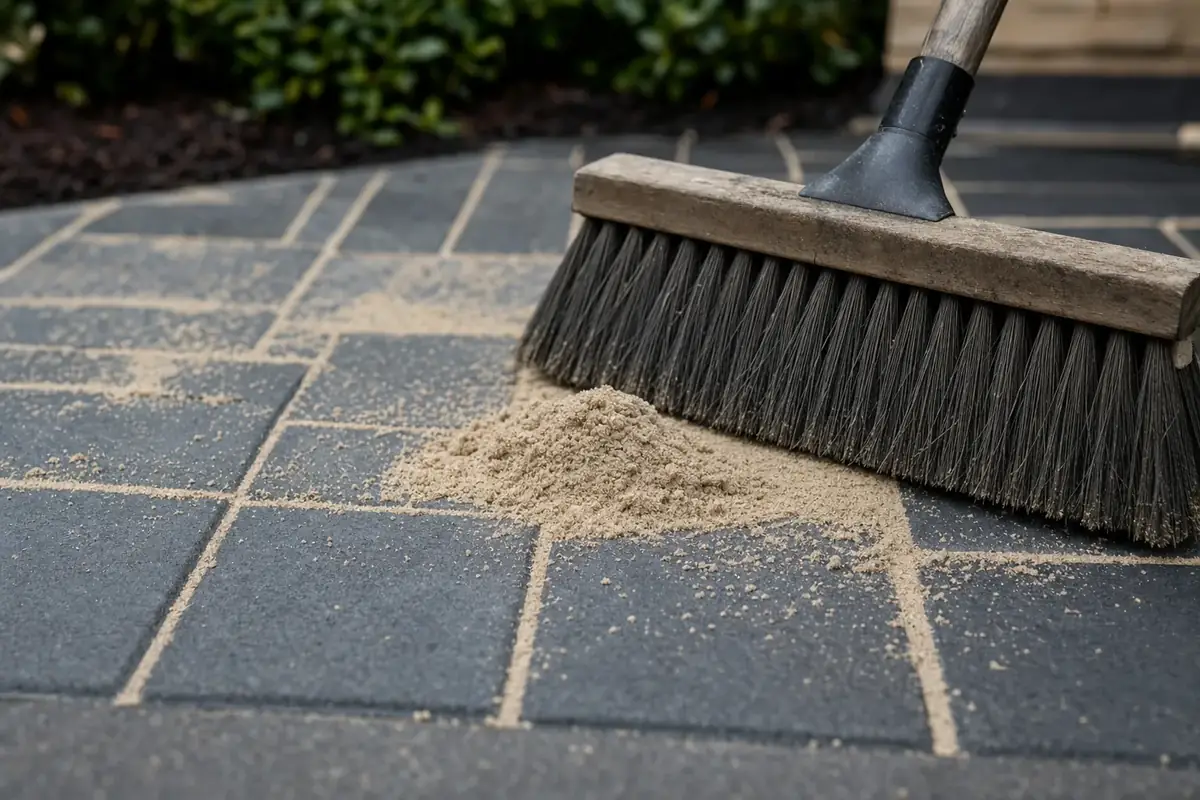
The single best defence is full joints. When kiln-dried sand is packed right to the top, there is little room for seeds to settle and root. If your joints look low or washed out, re-sanding is the first thing to do, ideally followed by sealing to help hold the sand in place.
For weeds that do appear, a path and patio weedkiller or a flush of boiling water will kill them off, then you brush them out. Moss, which loves the damp shady spots common in our South Wales climate, responds to the same treatment plus keeping the area clear of leaves and letting light in where you can. Try not to gouge weeds out with a knife, as that pulls the sand out with them.
Does sealing stop weeds in block paving?
Sealing helps a lot but does not make paving completely weed-proof. It binds the jointing sand so seeds struggle to settle and root, which cuts weed growth noticeably, but you will still get the odd seed landing on top. Think of sealing as making weeds rare and easy to remove rather than impossible.
Should you seal block paving, and how often?
Sealing block paving is optional but worthwhile: it stabilises the jointing sand, reduces weeds and moss, resists oil and stains and helps the colour last. Most block paving benefits from resealing every 3 to 5 years, depending on the sealer used and how much traffic and weather it takes.
You do not have to seal block paving, and plenty of driveways go unsealed for years. But sealing brings real benefits: it locks the jointing sand so it washes out less, makes weeds and moss less likely, helps shrug off oil drips and leaf stains, and slows the fading that UV causes over time.
Timing matters. New paving should be left to weather for around six to twelve months before its first seal, so any efflorescence, which is the white salty bloom that can appear on new blocks, has cleared. After that, most sealers need refreshing every 3 to 5 years, and the drive must be clean, dry and re-sanded first or you simply seal the dirt in.
There are matt and wet-look finishes to choose from, and the right one depends on your blocks and the look you want. If you are in an exposed coastal spot like Penarth, Barry or Porthcawl, where salt, wind and UV are harder on surfaces, sealing is well worth considering. We are happy to advise on the right product during a free site visit.
Can you seal old block paving?
Yes, older block paving can be sealed as long as it is sound, thoroughly cleaned and fully dry first, with the joints topped up with fresh kiln-dried sand. Sealing tired paving can noticeably lift its appearance. If the blocks are moving or the base has failed, though, sealing is not a fix and the paving needs relaying first.
How do you clean block paving without damaging it?
Clean block paving with a stiff brush, warm water and a dedicated patio or block paving cleaner, working the solution in and rinsing off. A pressure washer can be used carefully on a low, fanned setting held well back, but you must re-sand the joints afterwards because washing strips the sand out.
For everyday cleaning, a stiff brush, a bucket of warm water and a proper block paving cleaner will handle most dirt, algae and general grime. Work it in, give it time to do its job, then rinse off. Gentle and regular beats harsh and occasional every time.
Pressure washers are fine if you respect them. Use a fan nozzle, not a pinpoint jet, keep it on a lower setting, hold it well back and keep the lance moving so you do not scour the face of the blocks or blast out all the jointing sand. The mistake we see most is someone power washing a whole drive and leaving the joints empty, which lets the blocks loosen and weeds move in.
Whatever method you use, re-sand the joints with kiln-dried sand once the paving is dry, brushing it in until they are full again. For oil stains, a dedicated block paving oil remover works better than scrubbing with washing-up liquid. Avoid harsh acids and neat bleach, which can strip the colour and damage the surface.
Can you jet wash block paving?
Yes, you can jet wash block paving, but do it gently and always re-sand afterwards. Use a wide fan spray on a lower pressure, keep the nozzle moving and well back from the blocks, and never linger in one spot. Then let it dry and brush fresh kiln-dried sand into the joints to restore the interlock.
Can you repair or replace a few blocks without redoing the whole driveway?
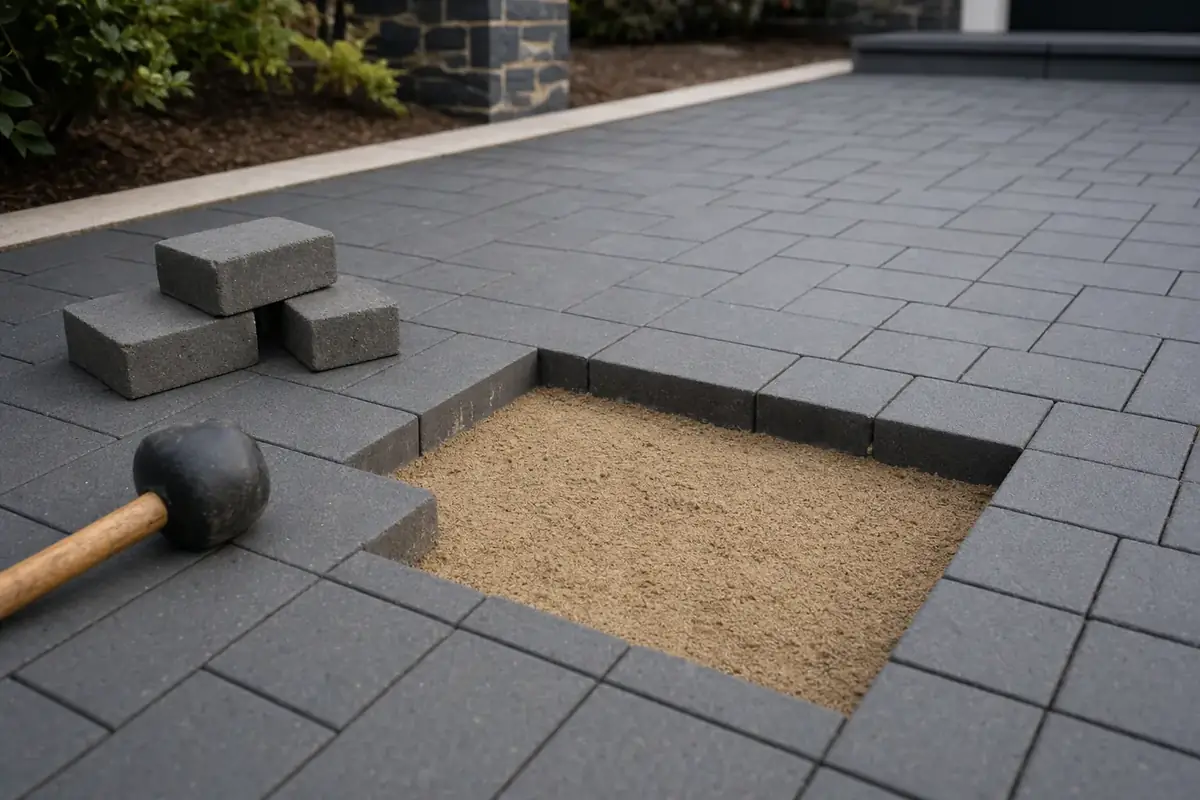
Yes, one of the biggest advantages of block paving is that you can lift and replace a few blocks or a small area without redoing the whole driveway. Because the blocks sit on sand rather than being glued down, a damaged or sunken section can be taken up, the base corrected and the same or matching blocks relaid.
This is where block paving really earns its keep. If a section has sunk, a block has cracked or an oil spill has ruined a patch, an installer can lift just that area, sort out whatever caused the problem underneath, and relay the blocks so it blends back in. Try that with a poured surface and you are looking at a much bigger repair.
The one thing to plan for is colour matching. Blocks fade a little over the years, and older ranges get discontinued, so a repair using brand new blocks can look slightly different at first. It usually weathers in, and keeping a few spare blocks from the original job makes future repairs match cleanly. If you do not have spares, we can help find the closest current match.
It is worth getting repairs done sooner rather than later. A single rocking block or a low spot that holds water will only spread as traffic and weather work on it. Catch it early and it is a quick fix; leave it and a small dip can turn into a larger relay.
Whether it is a handful of blocks or a tired driveway that needs lifting and relaying, we can take a look and tell you honestly what it needs. We cover Cardiff, Barry, Caerphilly, Cowbridge, the Vale of Glamorgan, Llantwit Major, Penarth and Porthcawl, and site visits are free.
Not sure if yours needs a repair or a full replacement?
Book a free site visit and we will give you a straight answer, backed by our 25-year guarantee and 35 years working with Cardiff and South Wales ground conditions.
Book a free site visit Call 07494 065997Frequently asked questions
Does a block paving driveway need planning permission in Wales?
Usually not, if the paving is permeable or drains to a border, lawn or soakaway rather than to the road. In Wales a front driveway of more than five square metres that is impermeable and drains onto the road or pavement does need planning permission. Cardiff also has a number of conservation areas, and some, along with parts of Penarth, carry Article 4 directions that can remove permitted development rights, so always confirm the rules with your local council for your specific property.
What is the difference between concrete and clay block paving?
Concrete blocks are moulded from concrete, come in many shapes and colours and cost less, though their colour softens over the years. Clay pavers are fired from clay like bricks, hold their colour much better and are very hard-wearing, but they cost more and come in fewer shapes. Both make excellent driveways when laid on a proper base.
How much does block paving cost per square metre in Cardiff?
As a rough 2026 guide, a fully installed block paving driveway in the Cardiff area often falls somewhere around 80 to 150 pounds per square metre, though the real figure depends on size, access, groundwork, drainage and the blocks you choose. Clay pavers and difficult access push it higher. For an exact price we give free written quotes after a no-obligation site visit.
Can you lay block paving over an existing concrete or tarmac driveway?
In some cases yes, but it is not usually the best approach. Laying over an old surface can raise the level too close to your damp course and cause drainage problems, and any movement underneath will transfer up through the new paving. More often we recommend taking the old surface up and building a proper base so the new paving lasts. We can advise after seeing it.
How thick should block paving be for a driveway?
For a driveway that takes cars, blocks are usually around 50 to 60mm thick, laid on a compacted sub-base of roughly 150mm or more with a sand laying course on top. Patios and paths that only take foot traffic can use thinner blocks. The exact build-up depends on your ground and how much load the drive will carry.
How long does it take to lay a block paving driveway?
Most domestic block paving driveways take around 5 to 10 working days, depending on the size, the amount of groundwork and the weather. Excavating and building the base is the slowest part, while the blocks themselves go down relatively quickly. The wet spells common in South Wales can add a little time.
More guides you might find useful

Do I Need Planning Permission for a Retaining Wall in Wales?
Most advice on retaining walls quotes English rules. Here is the Welsh guidance, the Highways Act control for walls near the street, when you need an engineer, why walls bulge, what they cost and who is responsible when a wall sits between two gardens.
Read the guide
Why Does My Driveway Flood Every Time It Rains?
Met Office averages put Cardiff at roughly 1,200 mm of rain a year, and the wettest months are exactly when drives flood. Here is how we diagnose standing water on site, the fall a drive should have, why soakaways struggle on local clay, what Wales requires, and what a fix costs.
Read the guide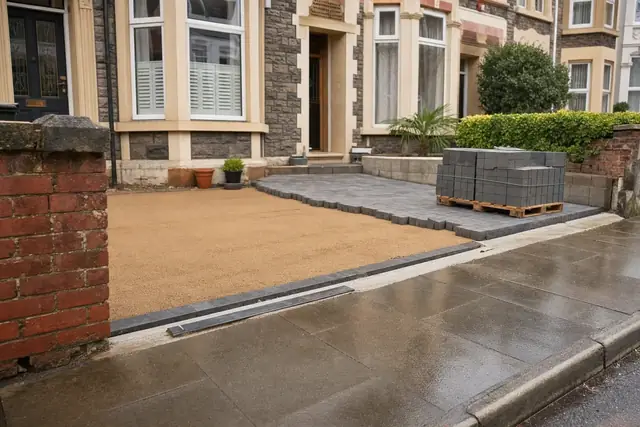
Do I Need Planning Permission for a Driveway in Wales?
Most driveways in Wales need no planning permission at all, as long as you get the surface and the drainage right. Here is how the five square metre rule, soakaways and dropped kerbs actually work in Cardiff.
Read the guide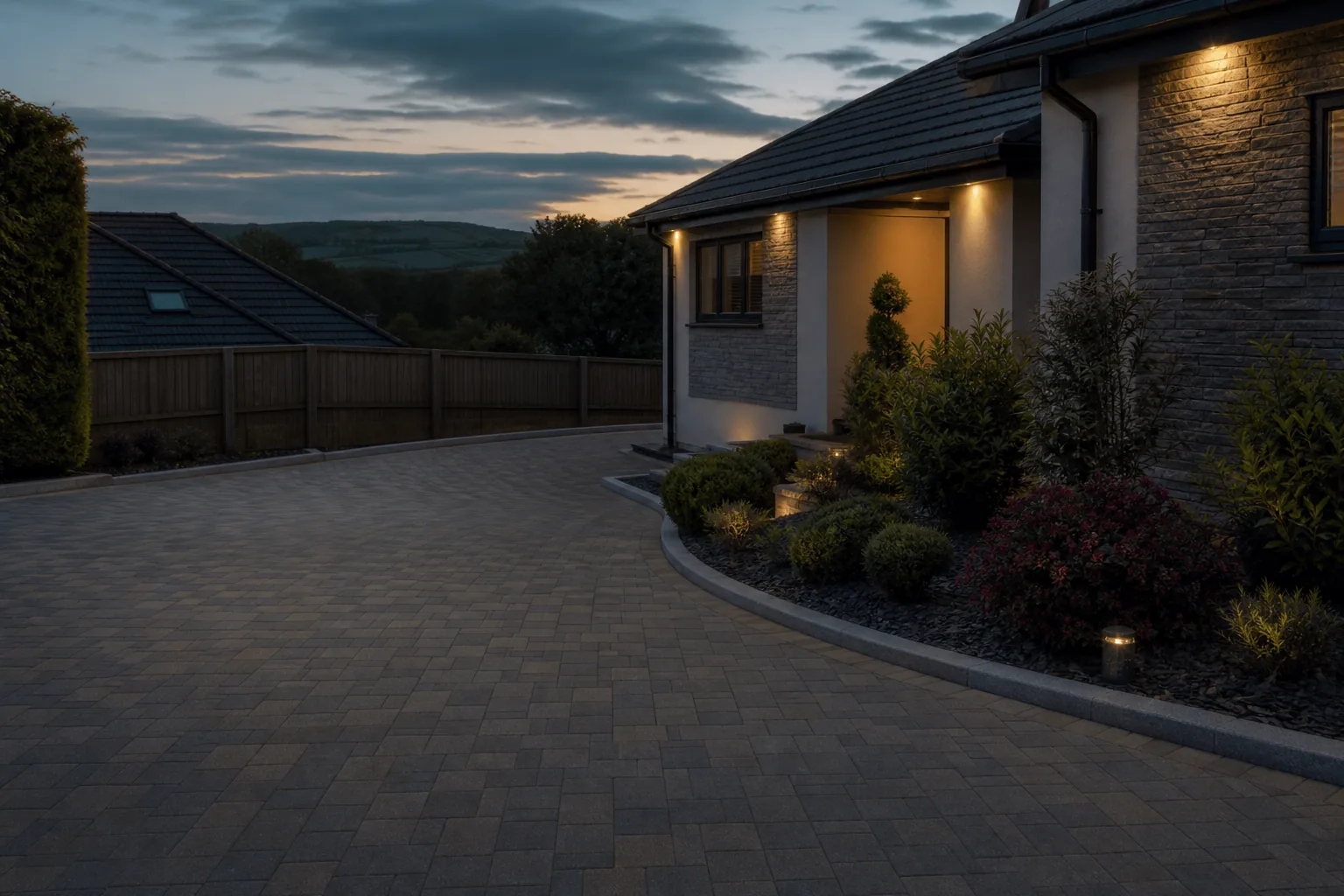
Ready to transform your driveway?
Free quotes, a 25-year guarantee, and a team that turns up when they say they will.