
Is a Concrete Driveway a Good Idea? Plain, Imprinted and Block Compared
Plain concrete, pattern imprinted and concrete block paving compared on cost, cracking, upkeep and the Welsh drainage rule.
Ask for a concrete driveway and you might get one of three quite different jobs. A plain brushed slab. Pattern imprinted concrete, stamped to look like cobbles or slate. Or concrete block paving, laid one block at a time. Same basic material, but they don't behave the same over twenty years of Welsh weather.
We've laid and replaced all three across Cardiff and South Wales since 1990. Cost matters, of course. But so does the practical stuff: why concrete cracks, what imprinted concrete needs to keep it looking right, how the Welsh drainage rule applies to a solid slab, and whether an old concrete drive can be covered over instead of dug out.
Is a concrete driveway a good idea for a Cardiff home?
It can be. Concrete is strong, weed free, and quick to lay over a large area. Pattern imprinted concrete gives you a decorative finish for 70 to 110 pounds per square metre. The trade off is it's one rigid slab. If it cracks, it's hard to hide. Repairs never quite match. And at the front, it needs a drainage route to stay within the Welsh planning rules.
Concrete does have its uses. A well laid slab will take cars and vans without rutting. There are no joints for weeds to settle in, and a crew can cover a big area in a few days. Pattern imprinted concrete gives you colour and a stamped finish. On a long drive, it can look smart for years.
Its weak point comes from the same place. Concrete is rigid, and a lot of Cardiff sits on clay that swells in wet winters and shrinks in dry summers. A slab can't move with it the way a flexible surface such as block paving can. That's why it needs control joints, so any cracking follows neat, planned lines instead of turning up anywhere.
Repairs catch people out as well. A crack in plain concrete can be filled, but you'll always see it. With pattern imprinted concrete, the colour and pattern cannot be matched, so a patch or a trench for a new cable shows for good. With block paving, you lift the blocks and put them back.
Concrete suits you if you want a hard wearing surface with little weed growth, and you're happy that it'll age as one solid slab. If you want repairs to disappear, or you want water to drain through the surface, block paving or resin bound is usually the better fit. Our surfaces compared guide puts the options side by side.
| What matters | Plain concrete | Pattern imprinted concrete | Concrete block paving |
|---|---|---|---|
| Typical cost | Quoted per job | £70 to £110 per m² | £80 to £120 per m² |
| Look | Brushed or smooth slab | Coloured, stamped pattern | Separate blocks in a laid pattern |
| Install time, two car drive | Usually quicker than imprinted | 2 to 4 days | 3 to 5 days |
| Drive on | About 7 days | 5 to 7 days | 3 to 7 days |
| Weeds | None in the surface | None in the surface | Can grow in the joints |
| Repairs | Filled cracks show | Patches never match | Lift and relay to match |
| Drains through the surface | No | No | Only permeable block systems |
What is the difference between plain, imprinted and concrete block driveways?
Plain concrete is a poured slab, finished brushed or smooth. Pattern imprinted concrete starts as the same sort of slab. It's coloured on the surface, stamped with mats so it looks like cobbles, slate or brick, then sealed. Concrete block paving isn't a slab. It's thousands of separate concrete blocks laid on sand over a compacted base.
Plain concrete is the workhorse. We dig out the ground, lay and compact the sub-base, then pour the concrete between edge forms. It's levelled and brushed so you've got grip. It's the most practical looking of the three, and you'll mostly see it on long drives, garage aprons and side passages.
Pattern imprinted concrete starts the same way. While the slab's still wet, we spread a colour hardener over the surface, put on a release agent, then press in flexible stamping mats to form the pattern. Once it's cured, it's cleaned and sealed. The colour is concentrated near the surface, so the sealer matters a lot.
Concrete block paving is what most people mean by concrete block driveways. The blocks are factory made, with the colour mixed into the concrete. We lay them in a pattern on a sand bed over a compacted base, then brush kiln dried sand into the joints so it all locks together. Our block paving guide covers the patterns and how to keep the joints weed free.
The bit that counts is how much the surface can move. Plain concrete and imprinted concrete are rigid, one piece surfaces. Block paving has a little give as one interlocked layer, and you can lift it and relay it. That's why it deals with clay movement better. It also copes better when utility work turns up, which it will on every street sooner or later.

How much does a concrete driveway cost in Cardiff?
Pattern imprinted concrete is usually 70 to 110 pounds per square metre. Concrete block paving is 80 to 120 pounds per square metre. Plain concrete is priced per job. The final price depends on what we find when we dig, the sub-base needed, how easily we can get concrete to the drive, plus drainage and edging.
With a concrete driveway, a lot of what you're paying for is buried before you ever see the finish. The old surface has to be broken out and taken away. The ground needs digging to the right depth. Then the sub-base goes in and gets compacted in layers. Skimp on that and even the best slab will crack.
Access matters more with concrete than it does with most other surfaces. Ready mixed concrete turns up in a truck and needs placing before it starts to set. If the truck can get straight to the drive, it'll cost less. If it has to be barrowed or pumped down a narrow side passage, or over a garden, it'll cost more.
Then there's drainage. Concrete doesn't let water through, so a front drive usually needs a channel drain, or it needs to fall into a border or soakaway. We build that into the price. Our drainage guide explains the options and what they cost.
Plain concrete usually comes in below imprinted concrete, because there's no colour, stamping or sealing. The groundwork is the same though, so the saving is smaller than people expect. Our driveway prices page shows the guide ranges for every surface, and a free written quote fixes the figure for your drive.
Why do concrete driveways crack, and can the cracks be repaired?
Concrete cracks because it shrinks while it cures. The ground underneath can move too, especially Cardiff clay as it wets and dries. We cut control joints so the concrete cracks along planned lines. Fine hairline cracks are usually cosmetic and can be sealed. If cracks widen or step out of level, that points to a base problem and usually means replacing that bay.
Some cracking is part of concrete. It shrinks a bit as it dries and cures. It also expands and contracts with the temperature.
Control joints are cut or formed at regular intervals, at corners, and where the shape changes. They give that movement somewhere to go. If a slab hasn't got enough joints, or they're cut too late, it'll crack where it wants.
Then the ground has its say. Clay soils swell and shrink with the seasons. Tree roots pull moisture out and push upwards. If the sub-base was too thin, or not compacted properly, the slab can settle unevenly. Overloading matters too. A slab laid for cars won't take kindly to a loaded skip lorry.
Hairline cracks that don't move are usually just cosmetic. We can clean them out and seal them, so water and frost stay out.
Wider cracks are different. If one side sits higher than the other, or the crack keeps growing, the base has moved. Filling it will only hide the problem for a while.
With pattern imprinted concrete, repairs show. Once the slab has weathered, you won't match the colour or the pattern. If a bay has failed, the honest fix is to cut it out back to the nearest joints and relay it. Our guide on why driveways sink explains the base problems behind most failures.
| Problem | Usual cause | What we would do |
|---|---|---|
| Hairline cracks that do not move | Shrinkage as the slab cured | Clean out and seal, then keep an eye on them |
| Wide or stepped cracks | Base settlement, clay movement or tree roots | Cut out the bay and relay it on a sound base |
| White, cloudy patches | Sealer applied over damp concrete | Re-soften the sealer with a solvent so the moisture escapes |
| Faded or patchy colour | Worn sealer and sun on the surface colour | Clean and reseal; a tinted sealer can lift mild fading |
| Slippery when wet | Glossy sealer with no grit added | Reseal with an anti slip additive in the final coat |
| Flaking surface | Frost or de-icing salt on young or weak concrete | Check the depth, then resurface or replace the bay |

What are the common problems with pattern imprinted concrete?
What we usually see is colour fading and going patchy as the sealer wears. You can also get white cloudy patches where sealer's gone onto damp concrete, a slippery finish when a glossy sealer has no grit in it, and cracks that can't be repaired invisibly. Most of it comes back to the sealer, or to joints and base work done badly at the start.
Imprinted concrete gets mixed reviews. Most of the horror stories come from rushed work, thin bases, missing joints and cheap sealer. If the base is right, the joints are put in the right places and the sealer is decent, it can last well. If it's done badly, the problems usually show up within a few winters.
Most problems start with the sealer. It protects the coloured surface and gives that wet look a lot of people like, but sun and traffic wear it down. As it goes, the colour dulls. The surface also starts going darker when it rains, because water's getting in.
If sealer goes onto damp concrete, or it's put down in damp weather, it can trap moisture and turn milky white.
Slipperiness is the complaint we hear most from people who've already got it. A glossy acrylic sealer on smooth stamped concrete can be treacherous in the wet, especially on a slope. Fine anti slip grit mixed into the final coat helps a lot. It's worth insisting on for any sloping drive or path.
One thing to be clear on is permanence. It's one coloured slab, so you can't lift a section to get to a pipe or cable, then put it back without seeing the join. If you're expecting work on the services under your drive, or you want the option of an invisible repair later, block paving with a cobble style block gives a similar look and can be relaid.
How often does imprinted concrete need resealing, and how do you clean it?
Most imprinted concrete drives need resealing every two to three years. On a sunny, busy frontage, it can be sooner. You'll know it's due when water stops beading on the surface, the colour looks dull or goes darker when wet, or the gloss has worn off in the tyre tracks. Clean it first, let it dry out fully, and only seal it in a dry spell.
How long sealer lasts comes down to the product, the sun and how much traffic the drive gets. So yes, it does vary. On a typical Cardiff drive, two to three years is a fair rule. Splash a bit of water on the surface. If it beads, the sealer's still doing its job. If it soaks in and darkens the concrete, it's time.
Start with a proper clean. A stiff brush and a suitable cleaner will shift most dirt and algae. If you're using a pressure washer, set it to a wide fan, keep the nozzle moving and stand well back. A close jet can strip a worn sealer in stripes. Oil stains need a degreaser before any reseal, or they'll show through.
The concrete needs to be properly dry first. In South Wales, that can mean waiting for a few dry days, not just one sunny afternoon. Seal damp concrete and you're likely to get white, cloudy patches. If they're already there, they can usually be sorted with a solvent. It re-softens the sealer and lets the trapped moisture out, instead of stripping the lot back.
Go easy with de-icing salt on imprinted concrete. Keep it off a new drive altogether. A light sand and grit mix is better for the sealer, and so is clearing snow early.
New imprinted concrete is normally sealed at around 28 days, once it has cured. The first reseal usually comes in its second or third year.

Is a concrete driveway permeable, and does it need planning permission in Wales?
No. Plain concrete and imprinted concrete are both impermeable. In Wales, if you're putting in a new front driveway over five square metres with an impermeable surface, you'll need planning permission if the rainwater runs onto the road. If it falls into a lawn, border or soakaway inside your boundary, it normally stays within permitted development. Before you go ahead, check it with your local council for your property.
The surface isn't usually the issue. It's where the rain goes. If a concrete drive at the front of the house sends water over the pavement and into the road, that's exactly what the five square metre rule is there to stop. Lay the same drive so it falls to a channel drain feeding a soakaway, or into a planted border, and it normally needs no application.
That's why we sort the drainage on a concrete drive before anything gets poured. We set the falls so water runs away from the house and the garage, to a point where it can soak into the ground inside your boundary.
On clay, where soakaways struggle, that can mean a bigger soakaway or a rain garden rather than a small one.
Concrete block paving can be laid as a permeable system. It uses wider joints and an open graded base, so water drains through and you avoid the problem altogether. Standard block paving on a sand bed acts more like a solid surface, so it still needs a fall to drainage.
Conservation areas, Article 4 directions and listed buildings can all change things, and Cardiff has a number of each. Bigger schemes may also need drainage approval under the Welsh rules for sustainable drainage. Our guide on planning permission explains the front garden rule in full. A quick call to your local council's planning team will confirm what applies on your street.
Can you lay resin, tarmac or block paving over an old concrete driveway?
Sometimes. Resin bound can go over a concrete drive if it's sound, level and properly prepared. Any cracks need cutting out and repairing first. Tarmac can also be laid over sound concrete, but the old joints and cracks do tend to show back through in time. Block paving is different: it almost always means breaking the concrete out, because it needs its own compacted base.
We won't recommend an overlay until we've checked what's underneath. The slab can't be rocking or sinking. Any cracks need to be stable, not still growing. We also check the levels at the front door and the garage, because the new surface will add thickness.
Resin bound is the most common overlay for concrete. We clean the surface, cut out and repair failing patches and cracks, finish the edges with a suitable restraint, then prime the base.
Joints in the concrete need thinking about properly, because movement there tends to show through the resin. And because the concrete underneath is still solid, the drive still needs a fall to drainage, just as it did before.
We can put tarmac over concrete too, but the slab will still move at its joints and cracks. Those lines often show back through the tarmac as reflective cracks within a few years. It can be a sensible budget fix, as long as you know the old joint pattern may come back.
Block paving needs a sand laying course on a compacted granular base, and the water has to drain away underneath. A concrete slab gets in the way of both. So we break the concrete out and take it away. It adds cost, but the new drive starts on the right base. When we come out for a free site visit, we'll tell you which route makes sense for your drive.
Not sure if yours needs a repair or a full replacement?
Book a free site visit and we will give you a straight answer, backed by our 25-year guarantee and 35 years working with Cardiff and South Wales ground conditions.
Book a free site visit Call 07494 065997Frequently asked questions
How long before I can drive on a new concrete driveway?
For pattern imprinted concrete, it's usually five to seven days, and longer in cold weather. You can walk on it after a day or two. Concrete keeps gaining strength for around four weeks, so keep heavy vans and skips off it during that time. The seal on imprinted concrete normally goes on at around 28 days.
Is concrete or block paving better for a driveway?
For most Cardiff homes, we'd usually steer you towards block paving. It's more forgiving. It flexes with clay ground, repairs can be made without standing out, and it can be laid as a permeable system. Concrete is the better fit if you want one solid, weed free surface. Pattern imprinted concrete usually costs a little less than block paving over a large area.
Can you change the colour of an old imprinted concrete drive?
Within limits. A tinted sealer can freshen up faded colour and even out mild patchiness, but it won't change the pattern or hide cracks. If the slab's badly cracked, or the colour has worn through in the tyre tracks, you're usually better off replacing it. Where the base allows, overlaying it with resin bound can also give a better result for the money.
Can a concrete driveway be laid in winter?
It can, if we're careful. We don't pour concrete onto frozen ground, or when a hard frost is forecast in the first few days. Water in the fresh mix can freeze and weaken the surface. Cold weather slows curing too, so we watch the forecast, protect fresh concrete where needed, and leave it longer before you drive on it.
More guides you might find useful

Decking or Patio: Which Is Better for a Cardiff Garden?
We build both, and the right answer depends on your garden more than on fashion. Here is how decking and patios compare on cost, lifespan, grip in the wet, sloping plots and upkeep, plus the Welsh rule that catches out raised decks.
Read the guide
Do I Need Planning Permission for a Retaining Wall in Wales?
Most advice on retaining walls quotes English rules. Here is the Welsh guidance, the Highways Act control for walls near the street, when you need an engineer, why walls bulge, what they cost and who is responsible when a wall sits between two gardens.
Read the guide
Why Does My Driveway Flood Every Time It Rains?
Met Office averages put Cardiff at roughly 1,200 mm of rain a year, and the wettest months are exactly when drives flood. Here is how we diagnose standing water on site, the fall a drive should have, why soakaways struggle on local clay, what Wales requires, and what a fix costs.
Read the guide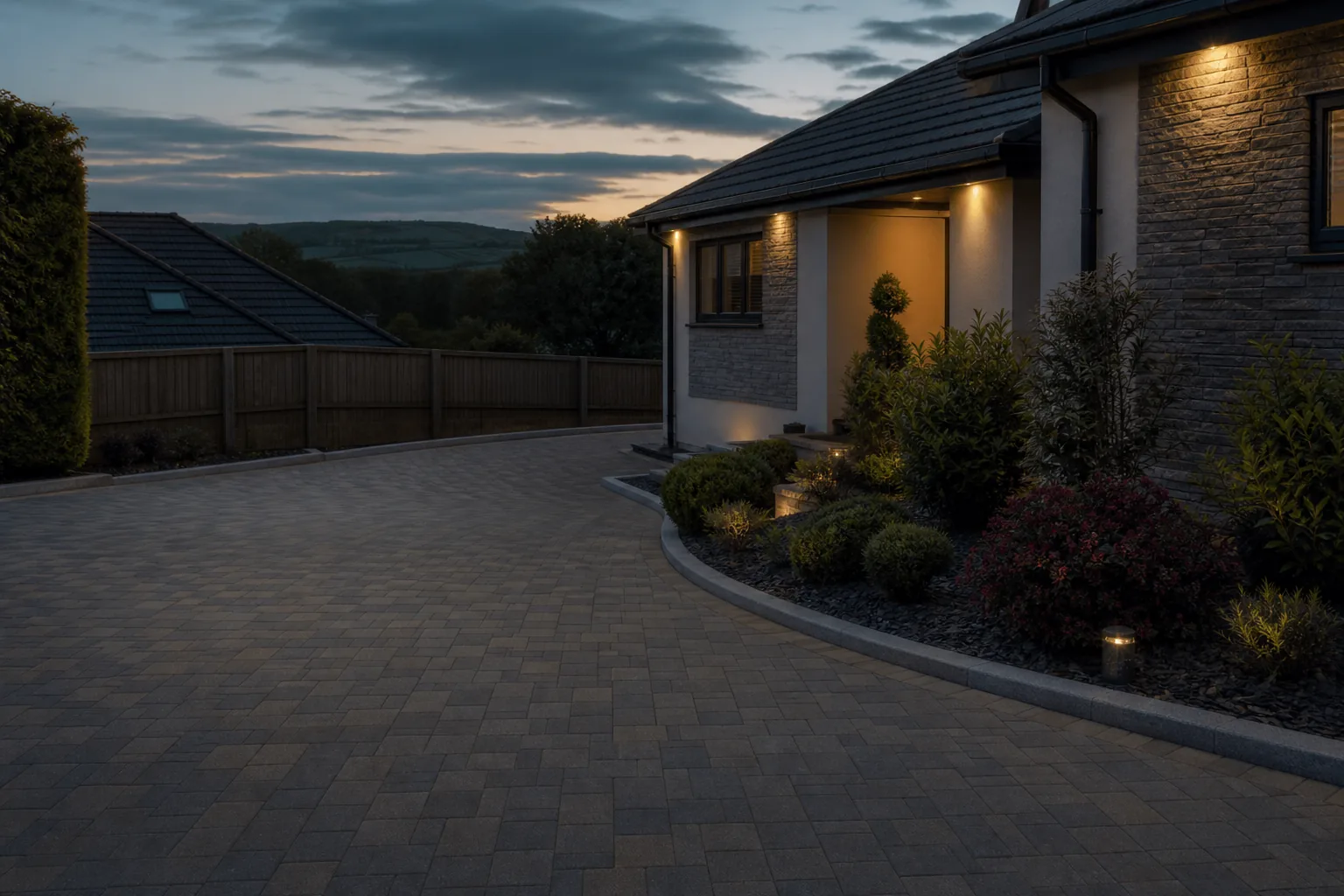
Ready to transform your driveway?
Free quotes, a 25-year guarantee, and a team that turns up when they say they will.