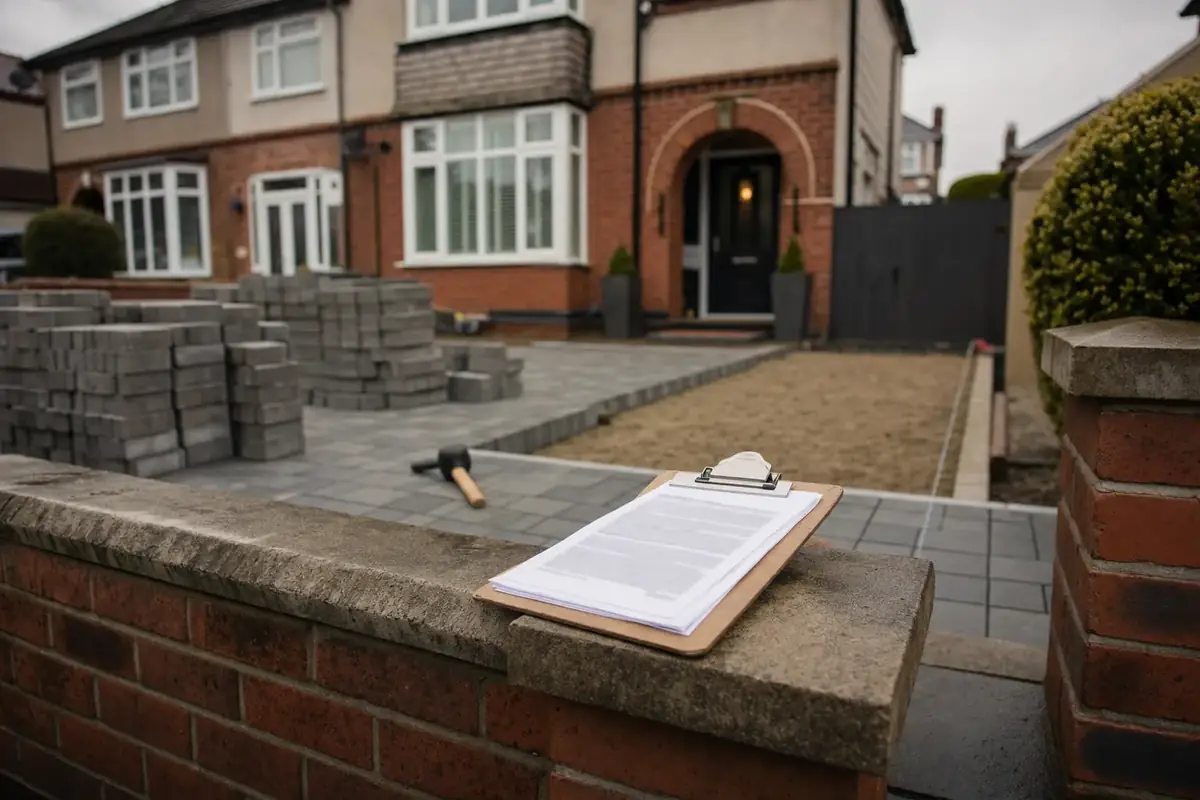
How Do I Choose a Good Driveway Company?
The questions to ask, the red flags to walk away from and what a proper quote looks like, from a family firm laying driveways across Cardiff since 1990.
A new driveway is one of those jobs you only want to do once. Done properly, it should still look right after twenty years of Welsh weather. Done badly, it can sink, crack or flood within two winters, and putting it right almost always costs more than doing it right would have in the first place.
We are Driveways and Paving Cardiff, a family-run firm that has been laying driveways and patios across Cardiff and the Vale since 1990. Over 35 years we have priced a great many jobs and put right plenty of other people's mistakes, so we have a fair idea of what separates a good contractor from a bad one.
This guide walks you through the questions to ask, what a proper quote looks like, how deposits should work and the warning signs of a cowboy outfit. None of it needs any trade knowledge. It is common sense, written down.
What questions should I ask a driveway contractor before hiring?
Ask how long they have been trading, whether they are insured, what depth they will excavate and what sub-base they will lay, how the drive will drain, who actually does the work, and what guarantee comes in writing. A good contractor will answer all six without hesitation.
Start with the basics. How long have you been trading under this name? Are you insured, and can I see the certificate? Can you give me addresses of recent jobs nearby that I can walk past? A firm that has been around for years will answer these happily. We have been trading as a family firm since 1990, and we would far rather you ask than wonder.
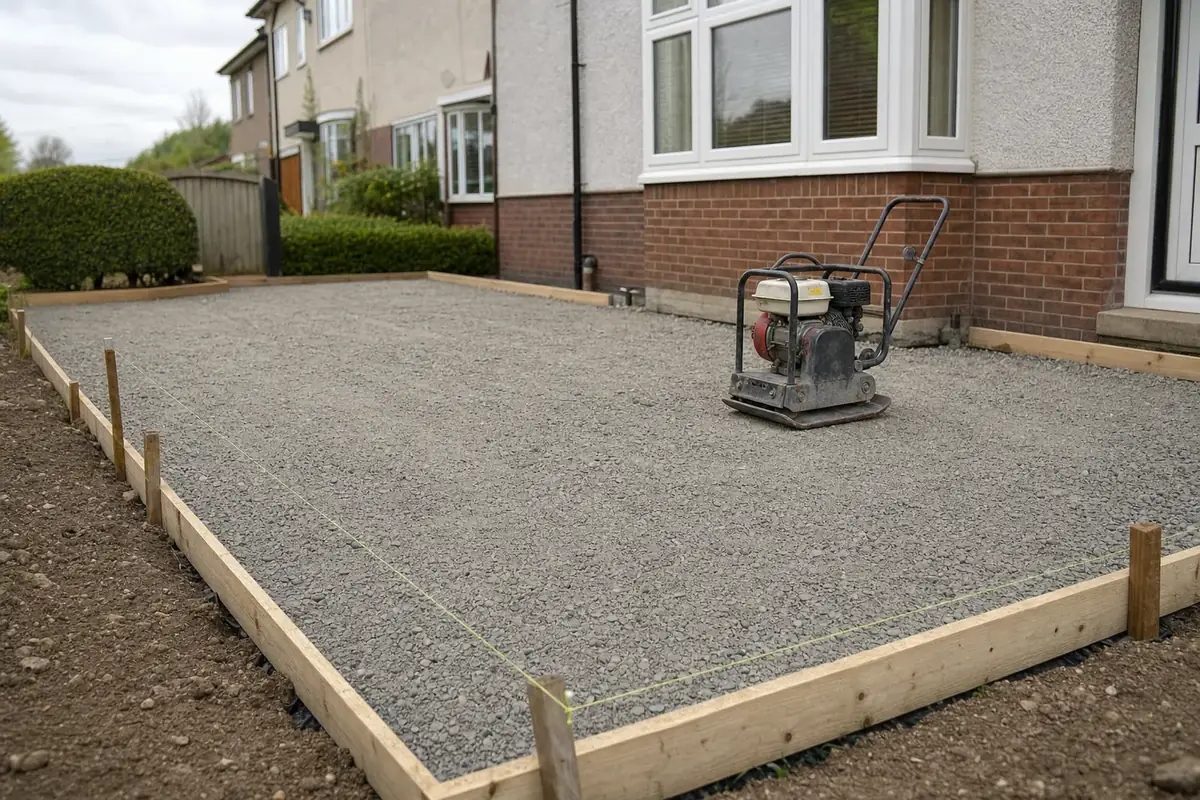
Then get into the ground, because that is where driveways are won and lost. Ask what depth they will excavate to and what sub-base they will lay. For a standard car driveway, somewhere around 100 to 150mm of compacted MOT Type 1 stone is a sensible benchmark on decent ground, and more on soft spots. A lot of the ground in and around Cardiff and the Vale is clay rich, and clay moves as it dries and wets, so a skimped sub-base tends to fail sooner here than it might elsewhere. What that failure looks like is covered in our guide on why driveways sink and crack, so we will not repeat it here.
Ask about drainage next. Cardiff gets a lot of Atlantic rain and the water has to go somewhere. A good contractor will explain whether the finished drive will shed water to a lawn or border, soak through a permeable surface, or run into a channel drain, and why they have chosen that route for your plot. The answer matters in Wales, because an impermeable front drive that sheds water towards the road can need planning permission, and it is always worth confirming the position with your local council. If a contractor waves the drainage question away, treat that as a warning sign.
Finally, ask who will actually be on your drive. Some firms sell the job and subcontract the labour, which is where standards slip. Ask whether it is their own team, who supervises the job day to day, and how the site will be left each evening. Simple questions, but the answers tell you a lot.
How do I know if a driveway company is legit?
A legitimate driveway company has a traceable trading history, a real local presence, insurance you can see, reviews spread over years rather than weeks, and no problem putting everything in writing. If any of those are missing, keep looking.
Start with the paper trail. A genuine firm can show you its public liability insurance, will put its quote in writing with full contact details, and has a track record you can actually check. Search the trading name along with Cardiff and see what comes up. Years of steady reviews are hard to fake. A burst of five star reviews all posted in the same month is not.
Read the reviews themselves, not just the score. Do they mention real streets, real jobs, and how snags were handled? We are rated 4.8 on Google, and we would always encourage you to read the written reviews rather than just glance at the number, for us or for anyone else you are considering.
Ask to see finished work in person. Any established installer working around Cardiff, Barry, Penarth or Caerphilly should be able to point you to driveways they laid five or ten years ago, not just last month. A drive that still sits flat and drains properly after a decade of Welsh rain tells you more than any brochure ever will.
And be careful with door knockers. A legitimate company almost never needs to knock on doors claiming they have materials left over from a job up the road. That line is one of the oldest tricks in the trade, and we go through it properly in the cowboy section further down.
What should a driveway quote include?
A proper driveway quote is written, itemised and fixed. It should state the excavation depth, the sub-base type and depth, the surface material and spec, edging, drainage, waste removal, the total price, payment terms and the guarantee.
If a price arrives as one number in a text message, that is not a quote, it is a guess. A written quote should break the job down so you can compare like with like: the dig out depth, what sub-base goes in and how deep, the paving or surface product by name, edge restraints, drainage provision, and who pays to cart the spoil away. Waste removal alone can run to hundreds of pounds on a full dig out, so it matters whether it is in the price.
The quote should also name the surface spec properly. For block paving, which blocks and what laying pattern. For resin, whether it is resin bound or resin bonded, and at what depth. For tarmac, the thickness of the binder and surface courses. Our block paving, resin and tarmac guides explain what those specs mean, so you can check any quote against them.
Expect the practical details too: a start window, how long the job should take, access arrangements, and what happens if the ground throws up a surprise once it is opened. Around Cardiff that matters, because clay ground and old buried services are common, and a good quote says how unforeseen work would be measured and priced rather than leaving it to an argument later.
Lastly, the guarantee should be stated in writing, with its length and what it covers. Ours is a 25 year workmanship guarantee, on paper, with every job we take on.
Should a driveway quote be a fixed price or an estimate?
For a standard domestic driveway, insist on a fixed price. An estimate leaves the final bill open, which is exactly where costs creep. The only fair exception is genuinely unforeseeable ground work once the drive is opened up, and even then the quote should say in advance how any extra would be priced and agreed before it is done.
Should the quote say whether VAT is included?
Yes, and get it in writing. A VAT registered firm should state clearly whether the figure includes VAT. A price that quietly grows by a fifth at invoice time is a classic cause of fallouts, so pin it down at quote stage, not at the end.
Why do driveway quotes vary so much?
Driveway quotes vary because the contractors are not pricing the same job. Differences in excavation depth, sub-base thickness, materials, edging, drainage, waste disposal and labour standards can easily put thousands of pounds between two quotes for the same drive.
It is common to collect three quotes for the same driveway and find the top one is nearly double the bottom one. That gap is rarely greed at the top or generosity at the bottom. It is usually a different job being priced. One firm plans to dig out to a proper depth and build a full compacted sub-base. Another plans to skim off the old surface and lay straight over whatever happens to be underneath.
The cheap version can look identical on day one. The difference shows up after a winter or two, and on Cardiff's clay ground it tends to show sooner, because the ground itself moves with the seasons. What that failure looks like is covered in our guide on why driveways sink and crack. This article's job is to help you catch it at quote stage, while it is still just a line on paper.
Materials drive real differences too. There is a wide spread between a budget block and a premium one, between a light tarmac spec and a heavy one, and between resin systems. As a rough 2026 guide only, a full dig out and rebuild of a typical two car driveway in South Wales might land anywhere from around £5,000 to £12,000 or more depending on size, surface and access, and those are approximate figures, not a price. Our cost calculator page will give you a ballpark for your own drive, and a free no obligation site visit will get you a written figure you can actually hold us to.
So when quotes differ, do not ask which is cheapest. Ask what each contractor is actually proposing to do, line by line. The right comparison is spec against spec. Once you level the spec, the prices usually close up, and the outliers explain themselves.
Should I pay a deposit for a new driveway?
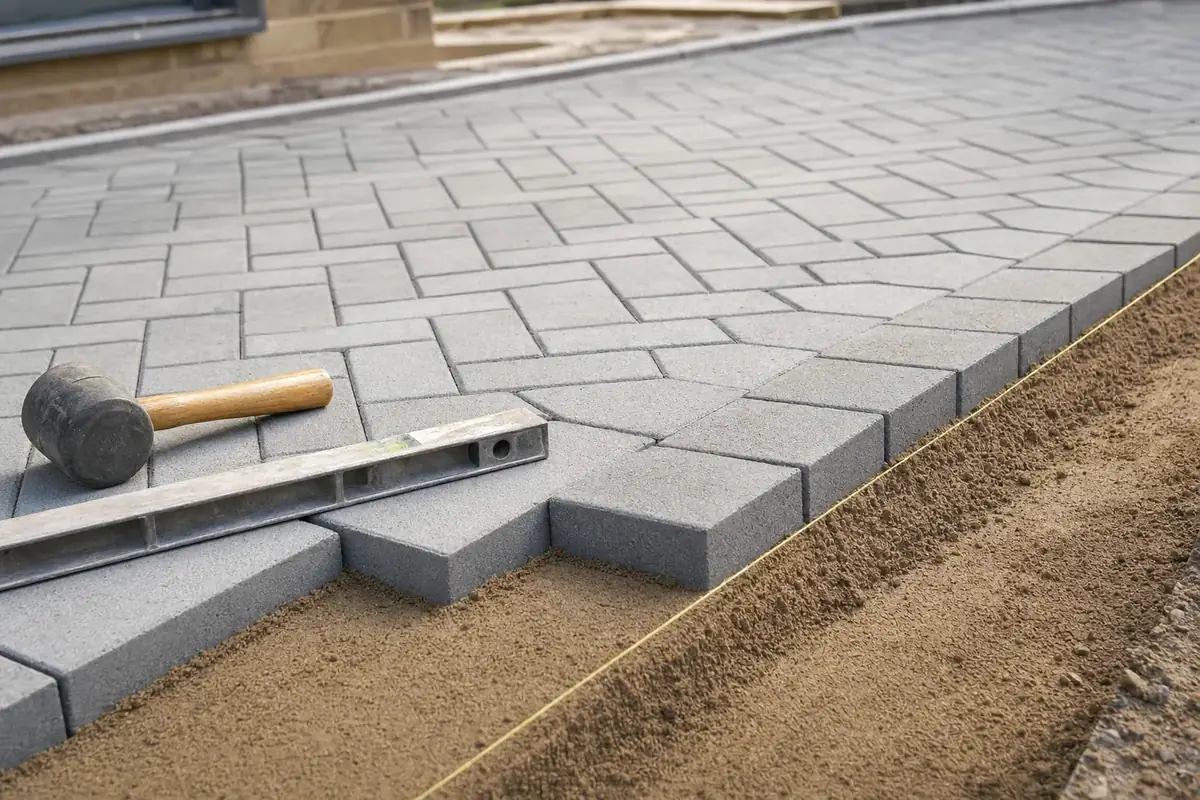
A modest deposit is normal once a start date is booked, typically to cover materials. As a rule of thumb, be wary of anyone wanting a large share of the price up front, and never hand a substantial cash deposit to someone who knocked on your door.
Deposits are not a red flag in themselves. Driveway materials are expensive, and it is fair for a firm to ask for something once the job is booked and the blocks or resin are ordered. What matters is proportion and paperwork. A deposit should be a minor share of the total, stated in the written quote, and receipted.
Be cautious about paying anything large before work starts, and think very hard about anyone who wants half or more up front. A firm with a real trading history does not need your money to stay afloat before it has lifted a spade. Cash only demands, pressure to pay today for a discount, and no written record are the classic combination that comes before a disappearing act.
Staged payments on bigger jobs are normal and sensible. For example, a portion at the start, a portion mid job, and the balance on completion once you are happy. That final payment is your leverage, so never hand it over before the snags are sorted. Any reputable installer expects that and builds it into the terms.
If in doubt, pay by a traceable method. A bank transfer or card payment leaves a record. It is also worth knowing that paying part of a larger sum by credit card can give you extra protection under UK consumer rules, though check the details with your card provider before relying on it.
How do I spot a cowboy driveway company?
The classic cowboy signs are cold calling at your door, a story about leftover materials from a job up the road, cash only prices with no written quote, no traceable address, pressure to decide today, and a price far below everyone else. Any one of those is reason enough to walk away.
Most driveway horror stories start the same way: a knock at the door. Someone says they are working nearby, they have tarmac or stone left over, and they can do your drive today at a good price. Real firms do not price serious groundwork off the back of a lorry. Leftover tarmac cools quickly and cannot be laid properly hours later, so the story rarely stacks up even on its own terms.
The next tells are all about traceability. No written quote, no address you can visit, a different phone number each time, and a push for cash. A cowboy needs to be hard to find later, so everything about how they operate is arranged around not being found. A legitimate firm is arranged around the exact opposite, because repeat work and reputation are how it survives.
Watch for workmanship shortcuts too. No real excavation, paving laid straight over old surfaces, no edge restraints, no fall for drainage, and no answer to the question of where rainwater goes. With our rainfall, and with the clay ground under much of Cardiff and the Vale, those shortcuts fail fast. We are often asked to put right drives laid this way, and the repair usually costs more than doing the job properly would have.
Price is the final tell. If one quote sits far below the rest, the saving is coming out of the ground, the materials or the labour, because it has to come from somewhere. And if you live near the coast in Penarth, Barry or Porthcawl, where salt air and driving rain punish weak materials and poor jointing, a cut corner shows itself even faster.
What guarantee should a driveway company offer?
Look for a written workmanship guarantee of at least ten years, separate from any manufacturer warranty on the paving itself. It should say exactly what is covered, and it is only as good as the company standing behind it, so trading history matters as much as the number.
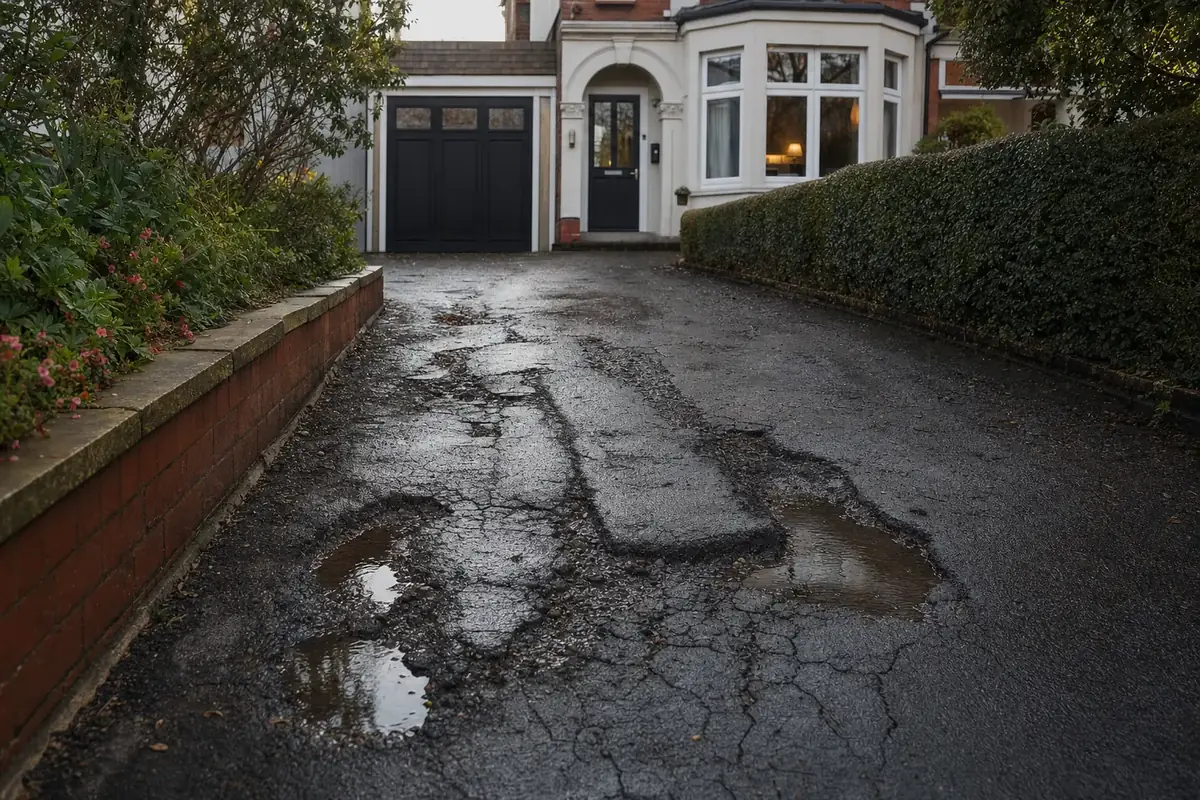
There are two different promises here, and it pays to know which is which. The manufacturer warranty covers the product, for example the blocks or the resin. The workmanship guarantee covers the installation, which is where most failures actually happen. Sinking, rutting, loose blocks and pooling water are nearly always installation problems, not product problems.
Get the guarantee in writing, on the quote and the invoice, with its length and what it covers. Ask what would void it and how a claim would work in practice. A vague verbal promise that the firm will always come back is worth exactly what it cost to give.
Also weigh up who is giving it. A twenty year guarantee from a company formed last year is a hope, not a promise. A guarantee is really a bet that the firm will still exist when you need them, which is why trading history is part of the guarantee itself. We offer a 25 year workmanship guarantee, and we can offer it because we have been trading since 1990 and we are still the same family firm.
One last thing: a guarantee should never be the excuse for a poor spec. The aim is a driveway, or a patio for that matter, that you never need to claim on. That is why we would always rather talk the build through with you at a free site visit than lean on paperwork afterwards. If you are still weighing up surfaces, our patio materials guide and the driveway guides above are a good place to start.
Not sure if yours needs a repair or a full replacement?
Book a free site visit and we will give you a straight answer, backed by our 25-year guarantee and 35 years working with Cardiff and South Wales ground conditions.
Book a free site visit Call 07494 065997Frequently asked questions
How many quotes should I get for a new driveway?
Three is a sensible number. It is enough to see the realistic price range for your drive without drowning in appointments. Make sure each quote is itemised so you can compare the spec line by line, not just the total at the bottom.
How long should a new driveway take to install?
As a rough guide, a typical domestic driveway takes around one to two weeks from dig out to finish, depending on size, surface, access and weather. Some surfaces need dry conditions to lay, which can move a start date in a wet spell. A proper quote should include a realistic timescale for your job.
Do I need planning permission for a new driveway in Cardiff?
Usually not, provided the new surface is permeable or the rainwater drains to a lawn or border within your boundary. In Wales, an impermeable front driveway of more than five square metres that drains towards the road normally needs planning permission, and larger areas of new hard surfacing can bring sustainable drainage rules into play too. Cardiff also has a number of conservation areas where stricter rules can apply, so always confirm the position with your local council before work starts.
What insurance should a driveway contractor have?
Public liability insurance as a minimum, and do not be shy about asking to see the certificate. It protects you if your property, a neighbour's property or a member of the public is affected while the work is underway. We are fully insured and happy to show the paperwork before we start.
Is the cheapest driveway quote always a bad sign?
Not always. Sometimes a lower price reflects easy access or a simpler spec. But if one quote sits far below every other, ask exactly where the saving comes from. If the answer is vague, the saving is usually coming out of the sub-base, and that is the one part you cannot inspect once the drive is finished.
Can I see examples of your work before hiring you?
Yes. We have 35 years of driveways and patios across Cardiff, Barry, Penarth, Caerphilly, Cowbridge, Llantwit Major, Porthcawl and the Vale of Glamorgan, and we are happy to point you towards finished jobs you can go and look at. Call 07494 065997 and we can arrange a free no obligation site visit at the same time.
More guides you might find useful

How Do I Prepare for a New Driveway Installation?
Everything to sort before the crew arrives, from clearing the drive and placing the skip to install times, weather delays and first weeks care. Applies to patios too.
Read the guide
Do I Need Planning Permission for a Retaining Wall in Wales?
Most advice on retaining walls quotes English rules. Here is the Welsh guidance, the Highways Act control for walls near the street, when you need an engineer, why walls bulge, what they cost and who is responsible when a wall sits between two gardens.
Read the guide
Why Does My Driveway Flood Every Time It Rains?
Met Office averages put Cardiff at roughly 1,200 mm of rain a year, and the wettest months are exactly when drives flood. Here is how we diagnose standing water on site, the fall a drive should have, why soakaways struggle on local clay, what Wales requires, and what a fix costs.
Read the guide
Ready to transform your driveway?
Free quotes, a 25-year guarantee, and a team that turns up when they say they will.