Porcelain, Indian Sandstone or Slate: Which Patio Is Best for a Cardiff Garden?
A plain, honest guide to choosing porcelain, Indian sandstone or slate for a wet, shaded South Wales garden, with rough costs, slip resistance and care.
Picking a patio is one of those jobs where the surface you choose really does change how the garden feels and how much upkeep you sign up for. In Cardiff and across South Wales we get plenty of Atlantic rain, damp shade under fences and trees, and salty coastal air near Penarth, Barry and Porthcawl, so the material has to cope with more than just looking nice on a dry day.
The three finishes homeowners ask us about most are porcelain, Indian sandstone and slate. Each has a fair claim to being the best, and the honest answer is that the right one depends on your garden, your budget and the look you are after.
We are a family-run business, established in 1990, so we have laid all three across the region for 35 years. This guide walks through the real differences, rough costs, how slippery each one gets and the care they need, and where planning rules in Wales come into it.
What is the best material for a patio: porcelain, Indian sandstone or slate?
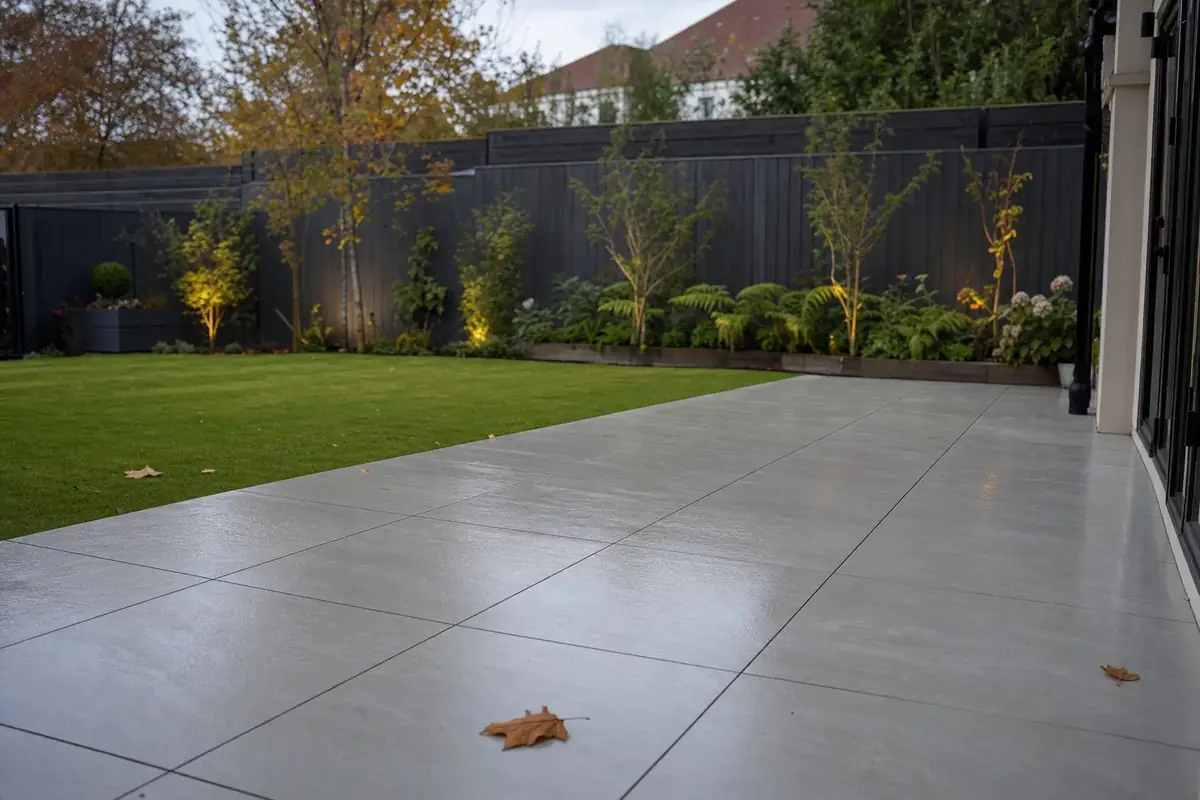
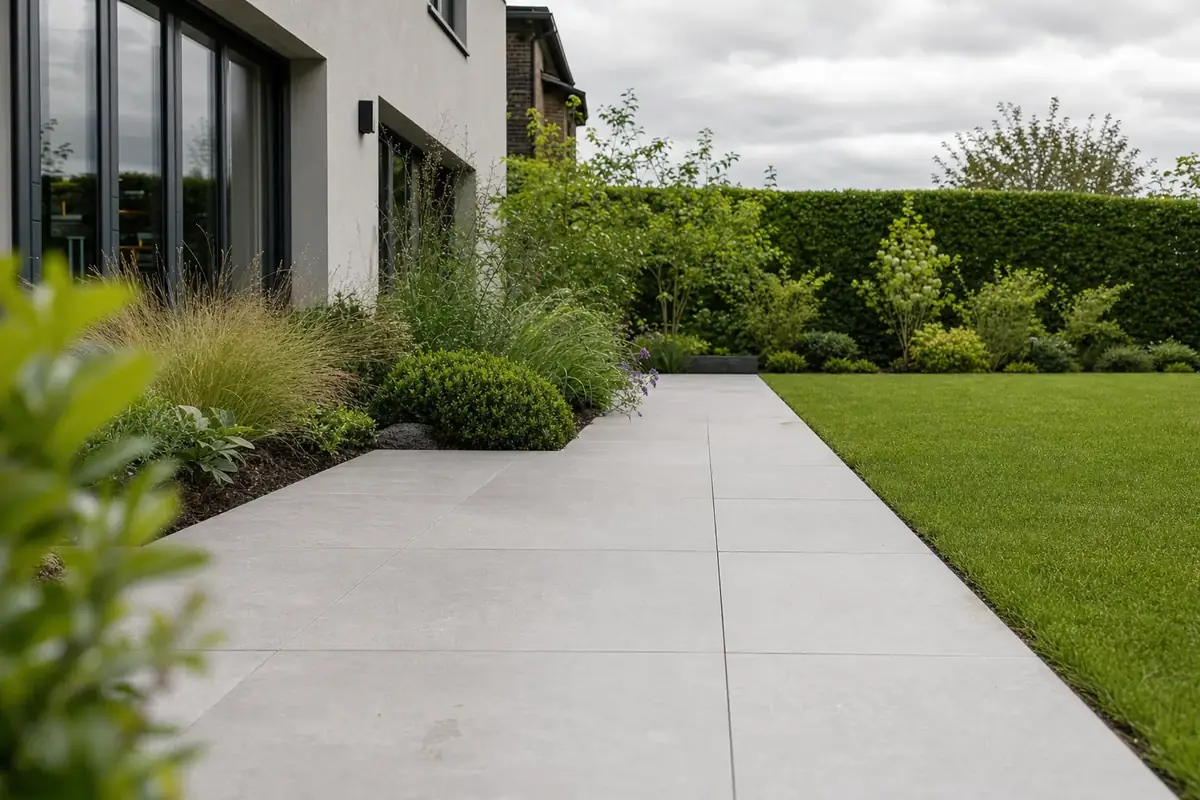
For most Cardiff gardens, porcelain is the best all-round patio material because it shrugs off stains, frost and algae and keeps its colour in our wet climate. Indian sandstone gives a warmer, natural look for less money, while slate suits a darker, modern finish, so the best choice comes down to your budget, style and how shaded and damp the garden is.
There is no single winner that suits every garden, but there is usually a clear best fit once you know your priorities. Think about three things: how much you want to spend, whether you prefer a natural or a crisp modern look, and how much sun the area gets.
Porcelain is a man-made, fired tile. It is dense, barely soaks up water and holds its colour, which is why it copes so well with our climate and needs the least upkeep. If low maintenance is your main goal, it is hard to beat.
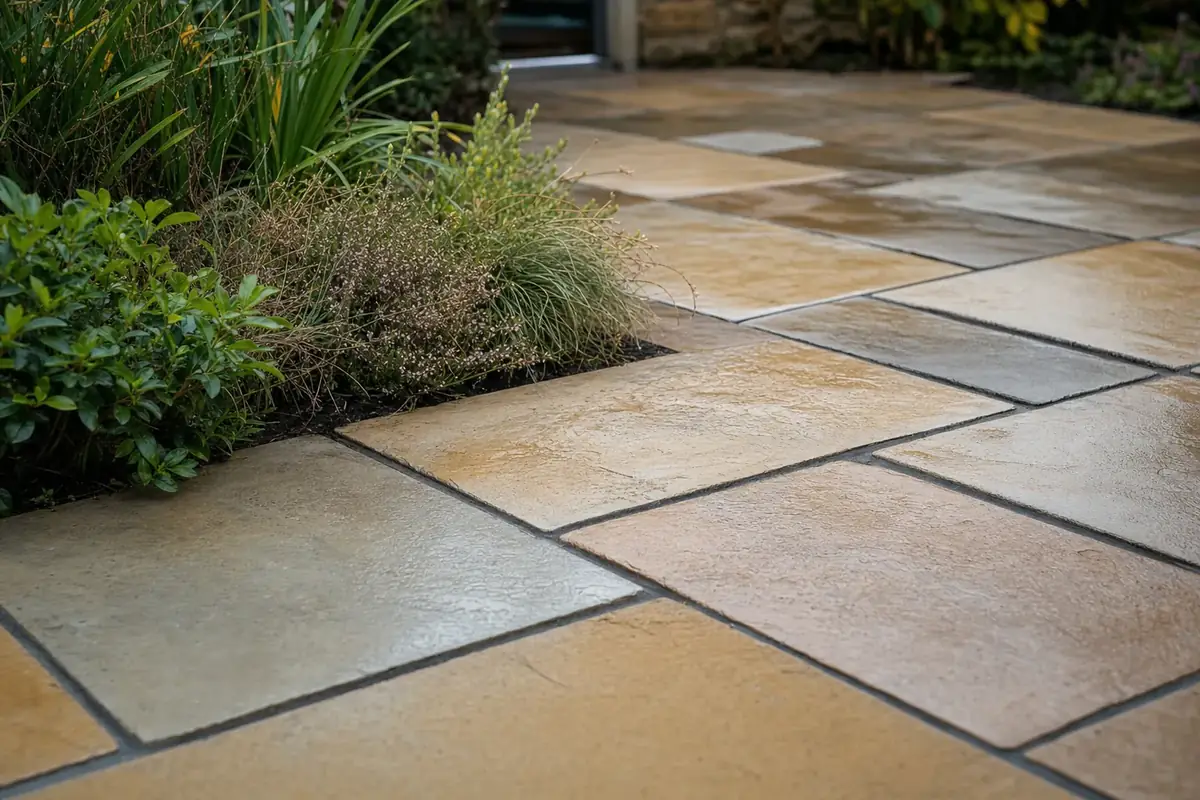
Indian sandstone is a natural stone, usually the most affordable of the three, with warm tones and a riven, slightly uneven surface that many people love for a traditional garden. It does need a bit more care to keep it clean. Slate is also natural, with a fine, layered texture and deep colours that look their best when wet, and it reads modern alongside rendered walls and contemporary planting.
As a rough guide for supply and fit in 2026, Indian sandstone patios tend to land around 90 to 130 pounds per square metre, porcelain around 120 to 180 pounds per square metre, and quality slate in a similar bracket to porcelain. Every figure moves with the size of the area, access, the groundwork needed and the finish you choose, so for an exact price it is always best to get a free written quote.
Which patio lasts the longest?
All three can last for decades when laid on a proper sub-base with the right mortar and falls for drainage. Porcelain and slate are very hard-wearing, and good Indian sandstone holds up well too. The biggest factor in how long a patio lasts is the quality of the groundwork underneath, not just the stone on top.
Is porcelain paving worth the extra cost?
Porcelain paving is usually worth the extra cost if you want a low-maintenance patio that stays looking new, because it resists stains, frost, algae and fading far better than natural stone and rarely needs sealing. If you prefer a natural look or you are working to a tighter budget, Indian sandstone can be the smarter buy.
Porcelain costs more per square metre than sandstone, and it can take a little longer to lay because the tiles are dense and often need cutting with the right blades. So the fair question is whether you get that money back.
For a lot of Cardiff gardens, you do. Porcelain barely absorbs water, so it does not soak up spills, it does not go green as quickly, and frost cannot get inside it and cause damage. You generally do not need to seal it, which saves a job every year or two.
The colour is printed and fired through a hard surface layer, so it does not fade in the sun the way some stone can. Near the coast at Penarth or Porthcawl, where salt and UV are harder on surfaces, that stability is a real plus.
Outdoor porcelain is usually 20mm thick and laid on a full mortar bed, so once it is down it feels solid underfoot and the joints stay crisp for years. Because it wipes clean and does not need sealing, the ongoing cost of owning it is low, which is part of why many buyers read it as a quality, hard-wearing finish.
The trade-offs are the higher upfront price and a look that some people find a touch too uniform. If you want the character of natural stone, that uniformity is a downside rather than a benefit. It is worth seeing samples in your own garden light before deciding, which is something we can bring along on a free site visit.
Is Indian sandstone good for a patio, and does it stain or go green?
Indian sandstone is a good, cost-effective patio choice with a warm natural look, and it lasts for years when laid properly. It is porous, though, so it can stain and go green with algae in damp, shaded spots unless you clean it now and then and seal it, which is common in our wet South Wales climate.
Indian sandstone has been popular here for a long time, and for good reason. It looks warm and characterful, it comes in a wide range of tones from buff and grey to multicolour, and it is usually the most budget-friendly of the three.
The thing to understand is that it is porous, meaning it soaks up water. In a sunny, open garden that is rarely a problem. In a shaded, damp corner, which plenty of Cardiff gardens have, that moisture feeds algae and the surface can go green over a winter.
It can also stain from things like barbecue grease, spilled drinks or leaves left to rot on the surface in autumn. None of this is a dealbreaker; it just means sandstone asks for a bit more looking after than porcelain.
A gentle wash once or twice a year and a good quality sealer make a big difference, cutting down how fast it greens and helping spills wipe off before they soak in. If you like the natural look and want to keep costs sensible, our Indian sandstone patios are still a strong choice for a lot of homes in Cardiff, Barry and the Vale of Glamorgan.
How do you get green algae off sandstone?
The safest way is a stiff brush with warm soapy water, or a proper patio cleaner made for natural stone, worked in and rinsed off. Keep pressure washers on a low, wide setting and hold the lance well back, because too much pressure can pit soft sandstone and strip the joints. Fixing the cause, usually poor drainage or heavy shade, keeps the green from coming straight back.
What about Welsh slate and other natural stone for a patio?
Welsh slate makes an attractive, hard-wearing patio with rich dark colours that show well, especially when wet, and it suits a modern garden. Slate paving is durable and low in absorption, but a smooth, wet slate can be slippery in shade, and other natural stones like limestone and granite are also worth considering depending on the look and budget you want.
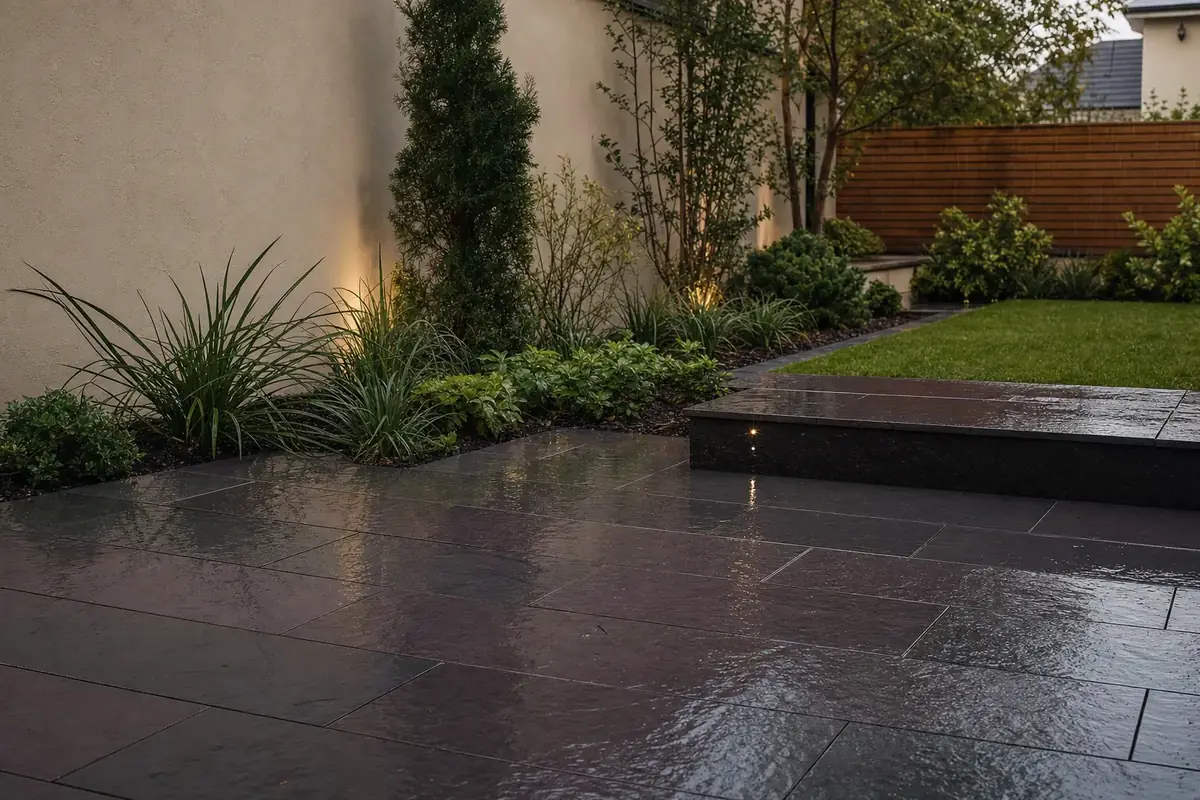
Slate has a fine, layered grain and deep colours, often charcoal, plum and green tones, that deepen after rain. It pairs really well with rendered walls, grey window frames and simple planting, so it is a favourite for contemporary gardens.
As a natural stone it is generally dense and hard-wearing, and it does not soak up as much water as sandstone. The main thing to watch is the surface finish. A smoother slate can get slippery when it is wet and shaded, so a textured or riven finish is the safer pick for a damp Cardiff garden.
Beyond slate, granite is extremely tough and slip resistant with a subtle sparkle, and limestone gives a soft, even, contemporary look. Both sit at the pricier end, closer to porcelain than to basic sandstone.
One practical point with slate is that natural riven pieces can vary a little in thickness, so a careful installer will bed each one individually to keep the surface even underfoot. It is also worth sealing slate soon after it is laid, both to bring out the colour and to make those first few winters easier to keep clean.
If you are drawn to a darker, modern patio, slate or granite are well worth a look. As with any natural stone, sealing helps protect the colour and makes the surface easier to keep clean, and we are happy to talk through the options on a free site visit anywhere from Cowbridge to Caerphilly.
Which patio is least slippery for a shaded, damp Cardiff garden?
For a shaded, damp Cardiff garden, textured porcelain made for outdoor use is usually the least slippery patio, because it is designed with a high slip-resistance rating and does not hold algae well. A riven, unpolished natural stone such as textured sandstone, riven slate or flamed granite is also a safe choice, whereas smooth, polished surfaces are the ones to avoid.
Slipperiness comes down to two things: the texture of the surface and how much algae grows on it. Shade and damp encourage that thin green film, and that film is what actually makes people slip, more than the stone itself.
Outdoor porcelain is a strong performer here. Good external ranges are made with a textured, grippy surface and carry a high slip-resistance rating, and because porcelain does not absorb water, algae struggles to take hold. That combination is why we often steer people towards porcelain for north-facing or tree-shaded gardens.
Among natural stones, choose a riven or textured finish rather than a smooth, honed or polished one. Textured sandstone, riven slate and flamed granite all give decent grip. The finish matters more than the material, so a rough sandstone can out-grip a smooth slate.
Whatever you pick, keeping the surface clean is half the battle, and getting the falls and drainage right so water runs off rather than sitting there stops the algae building up in the first place. In our climate, that drainage detail is one of the most important parts of the job.
How do you clean and seal each type of patio?
Clean any patio with a stiff brush and warm soapy water or a dedicated patio cleaner, and use a pressure washer only on a low, careful setting. Porcelain rarely needs sealing, while Indian sandstone, slate and other natural stone benefit from a suitable stone sealer, usually every couple of years, to slow staining and algae.
For everyday cleaning, less aggressive is better. A stiff brush, warm water with a little washing-up liquid or a proper patio cleaner will lift most dirt and green film. If you use a pressure washer, keep it on a low, wide setting, hold it back from the surface and keep it moving, because too much pressure damages jointing and can pit soft stone.
Porcelain is the easy one. It does not usually need sealing at all; a wash a couple of times a year keeps it looking new, and stains generally wipe straight off because nothing soaks in.
Indian sandstone and other natural stone are porous, so a good impregnating sealer is worth it. It does not change the look much but it helps water and spills bead off, slows algae and makes cleaning easier. As a rough guide, plan to reseal natural stone every couple of years, though sheltered or shaded patios may need it a little more often.
Slate sits in between. It is denser than sandstone but still benefits from sealing, mainly to deepen and protect the colour and to keep the surface easy to clean. Always let a new patio dry out fully and follow the sealer instructions, and test any cleaner on a small hidden area first.
How often should you reseal a natural stone patio in South Wales?
As a rough rule, every two years or so for Indian sandstone and slate, but our wet, shaded conditions can shorten that. A simple test is to splash water on the surface: if it soaks straight in and darkens the stone rather than beading up, it is time to reseal.
Do I need planning permission for a patio in Wales?
In most cases you do not need planning permission for a patio in Wales if it is laid at or near ground level as part of your garden, because it usually counts as permitted development. Raised patios and platforms, listed buildings, and homes in conservation areas or under Article 4 directions can be different, so it is always worth confirming with your local council for your specific property.
A normal, ground-level patio in your back garden almost always sits within permitted development, so no application is needed. The rules get stricter when a patio is raised up on a platform, because a raised deck or terrace can overlook neighbours, and that can need permission.
Location matters too. If your home is listed, or it sits in one of Cardiff's conservation areas, or an area covered by an Article 4 direction, some of the usual permitted development rights can be removed or limited. Because these can be varied street by street, confirm with your local council before you start.
Drainage is the other thing to think about, especially where a patio meets a driveway. In Wales, a front driveway of more than five square metres that is impermeable and drains onto the road or pavement needs planning permission, whereas a permeable surface, or one that drains to a border, lawn or soakaway, usually does not. Again, the safe move is to check with your local council for your own property, as rules can be applied locally.
Getting drainage right is not just a planning matter here. With our high rainfall and the clay-rich ground under much of Cardiff and the Vale of Glamorgan, which can swell and shrink as it wets and dries, you want water running away cleanly rather than pooling against the house or the patio edge. We build the falls and drainage into every patio we lay, whether it is porcelain, natural stone, or a patio that ties into block paving or a resin or tarmac driveway, and we are happy to advise on all of this on a free, no-obligation site visit.
Not sure if yours needs a repair or a full replacement?
Book a free site visit and we will give you a straight answer, backed by our 25-year guarantee and 35 years working with Cardiff and South Wales ground conditions.
Book a free site visit Call 07494 065997Frequently asked questions
How long does it take to lay a patio?
For a typical domestic patio, allow roughly three to seven days once work starts, depending on the size, access and how much groundwork and drainage is needed. Wet weather can add a little time, since some steps need dry conditions to cure properly. We give a realistic timescale in your written quote.
What is the best base for a patio in a wet climate?
A solid patio needs a compacted sub-base of crushed stone, a full mortar bed under every slab and the right falls so water runs off. Skipping the base or using spot dabs of mortar is the main reason patios sink, crack or rock over time, and in our rainfall a proper base really matters.
Can you lay a new patio over an old one?
Sometimes, but it is usually better not to. Laying over an old patio can raise the level too close to the damp course and often hides drainage or settlement problems underneath. We normally lift the old surface, check the base and start from a sound foundation, which we can assess on a free site visit.
Which patio adds the most value to a house?
A well-built patio in any of these materials can make a garden more usable and more appealing to buyers, which is what really adds value. Porcelain and quality natural stone tend to look the most premium, but a tidy, well-drained patio that suits the house matters more than the material alone.
Do you install patios across the whole of South Wales?
Yes. As well as Cardiff we regularly work in Barry, Penarth, Caerphilly, Cowbridge, Llantwit Major, Porthcawl and across the Vale of Glamorgan. We are fully insured, our workmanship is backed by a 25-year guarantee, and site visits are free with no obligation. You can reach us on 07494 065997.
Is porcelain or sandstone better around a pool or water feature?
Porcelain is usually the better pick around water because it barely absorbs moisture, resists staining and comes in textured, slip-resistant finishes. Natural stone can work too, but it will need sealing and a little more care to stop it going slippery or green.
More guides you might find useful

Do I Need Planning Permission for a Retaining Wall in Wales?
Most advice on retaining walls quotes English rules. Here is the Welsh guidance, the Highways Act control for walls near the street, when you need an engineer, why walls bulge, what they cost and who is responsible when a wall sits between two gardens.
Read the guide
Why Does My Driveway Flood Every Time It Rains?
Met Office averages put Cardiff at roughly 1,200 mm of rain a year, and the wettest months are exactly when drives flood. Here is how we diagnose standing water on site, the fall a drive should have, why soakaways struggle on local clay, what Wales requires, and what a fix costs.
Read the guide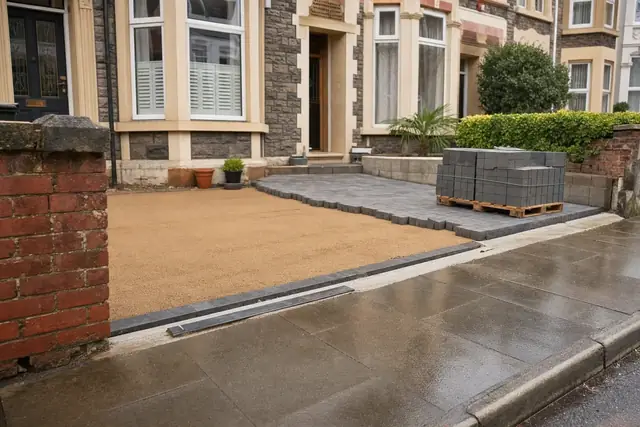
Do I Need Planning Permission for a Driveway in Wales?
Most driveways in Wales need no planning permission at all, as long as you get the surface and the drainage right. Here is how the five square metre rule, soakaways and dropped kerbs actually work in Cardiff.
Read the guide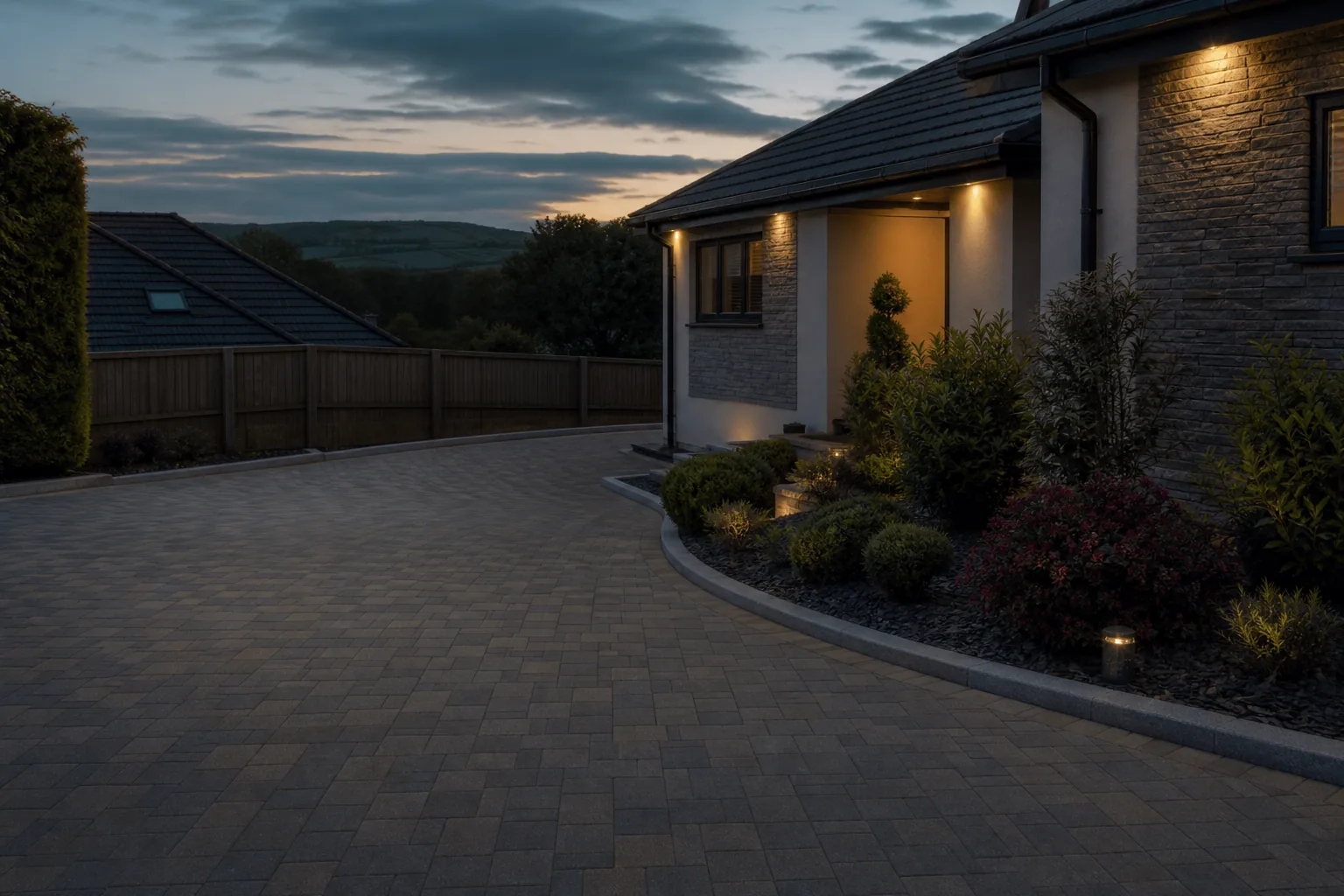
Ready to transform your garden?
Free quotes, a 25-year guarantee, and a team that turns up when they say they will.