How Long Does a Tarmac Driveway Last? Cardiff Costs, Care and Common Problems
A straight-talking guide to tarmac driveway lifespan, prices and upkeep in Cardiff and the Vale of Glamorgan.
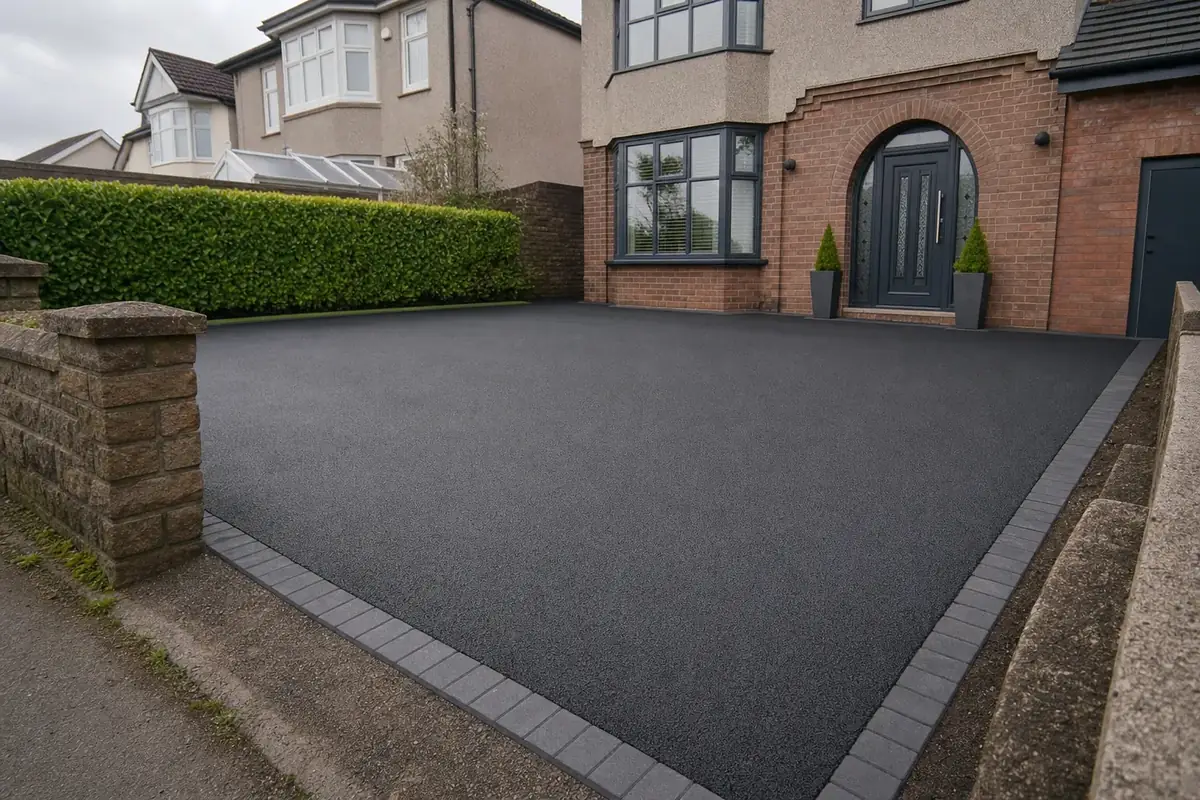
A well laid tarmac driveway in Cardiff usually lasts around 15 to 20 years, and a good one can push past 25 with sensible care. That is a fair stretch of life for a surface that is quick to lay and easy on the wallet, but the number you actually get depends far more on what sits under the tarmac than the tarmac itself.
South Wales gives a driveway a hard time. Much of Cardiff and the Vale of Glamorgan sits on clay-rich ground that swells and shrinks as it gets wet and dries out, we get plenty of Atlantic rain, and spots like Penarth, Barry and Porthcawl take salt and wind off the sea. All of that works on a surface over the years, so how it is built and cared for really matters.
We are Driveways and Paving Cardiff, a fully insured, family-run firm that has been laying driveways and patios across Cardiff and South Wales since 1990, with a 4.8 rating on Google. This guide walks you through how long tarmac lasts, what it costs around here, how it compares with block paving and resin, why driveways fail, and how to get the most years out of yours.
How long does a tarmac driveway last in the UK?
A properly laid tarmac driveway lasts around 15 to 20 years in the UK, and can reach 25 years or more if the base is done right, water drains away and small cracks are dealt with early.
The single biggest factor in how long tarmac lasts is the base underneath it. A proper driveway is built up in layers: a compacted sub-base of crushed stone, then a binder course, then the smooth top layer you see. If that base is thin, poorly compacted or laid over soft ground, the tarmac will move and crack no matter how good the top looks on day one.
Drainage is the next big thing. Tarmac hates sitting water. If puddles form and stay, water works into the surface and any tiny cracks, then freezes and thaws through winter and slowly breaks it apart. A driveway that sheds water to a border, gully or soakaway will always outlast one where water pools.
Edges matter too. Tarmac has no natural restraint at its sides, so without a firm edge, such as a block paving course or a concrete haunch, it can crumble and spread outward over time. That is why we usually finish tarmac driveways with a solid edge, and it is part of why a tidy border helps a driveway last.
Around here, the clay ground and the rain make good groundwork and drainage even more important. Cut corners on the base in the Vale of Glamorgan and you will often see cracks within a few winters. Do it properly and 20 years is a realistic target.
How much does a tarmac driveway cost in Cardiff?
In Cardiff, a new tarmac driveway usually costs around 50 to 90 pounds per square metre laid in 2026, so a typical driveway often lands somewhere between roughly 2,000 and 5,000 pounds depending on size, access, groundwork and finish. Only a proper site visit can give you an exact figure for your property.
As a rough guide, new tarmac in Cardiff tends to run around 50 to 90 pounds per square metre laid, so many domestic driveways land somewhere between roughly 2,000 and 5,000 pounds. Bigger or more awkward jobs can sit above that. These are ballpark figures only, and the real price depends on size, access, how much groundwork is needed and the finish you choose.
A lot of the cost is hidden in the groundwork rather than the tarmac. If the old surface has to come up, the ground is soft, or a new sub-base and drainage are needed, that adds labour and materials before a drop of tarmac is laid. A flat, sound base that just needs resurfacing costs far less than a full dig out and rebuild.
Access changes the price as well. A driveway a lorry can reach easily is cheaper to lay than one where everything has to be barrowed through a side gate. Coloured tarmac, such as red, and decorative edges also add to the total.
The honest answer to what your driveway will cost is that someone needs to look at it. We offer free, no-obligation site visits and a written quote, so you get a real figure for your property rather than a guess off a price list.
Is tarmac cheaper than block paving or resin?
Usually, yes. For the same area, tarmac is normally the most affordable of the three, block paving sits in the middle, and resin bound is typically the dearest. On a large driveway that gap can be significant, which is why tarmac is so popular for longer drives.
Tarmac vs block paving vs resin: which driveway surface is best?
There is no single best surface: tarmac is the cheapest and quickest for larger or sloped driveways, block paving is the most repairable and traditional, and resin bound is the smoothest and most permeable. The right choice comes down to your budget, your drainage and the look you want.
Tarmac, block paving and resin each win at something different, so the best surface depends on what you care about most. Tarmac is the cheapest per square metre, goes down fast and copes well with large or sloping areas. Block paving is hard-wearing, traditional and easy to repair because you can lift and replace individual blocks. Resin bound is smooth, comes in many colours and is naturally permeable, which helps with drainage and planning.
For a big or sloped driveway on a budget, tarmac usually makes the most sense. If you want a classic look and the option to swap out a stained or sunken area later, block paving is hard to beat. If you want a smooth finish with no puddles and do not mind paying more, our resin driveways are worth a look.
Permeability is worth thinking about before you decide. A permeable surface, or one that drains to a border, lawn or soakaway rather than the road, usually avoids the need for planning permission on a front driveway, whereas a solid impermeable surface draining to the road can trigger it. Rules can be varied locally, so check with your council for your specific property before you commit.
Which driveway surface lasts longest?
Block paving and resin bound generally last the longest, often 20 to 30 years or more when laid well, while tarmac typically gives 15 to 20. That said, a badly laid block driveway can fail faster than a well laid tarmac one, so the quality of the groundwork matters more than the material you pick.
Why is my tarmac driveway cracking, crumbling or going soft?
Tarmac cracks, crumbles or goes soft mainly because of a weak base, standing water, tree roots, fuel or oil spills, or hot weather softening the bitumen. Most problems trace back to drainage or the sub-base rather than the tarmac itself.
Most tarmac problems come down to what is underneath, not the tarmac on top. Cracking and sinking usually mean the sub-base has moved or was never strong enough, often made worse by water getting in and washing the fines away. On Cardiff's clay soils, ground that swells and shrinks with the seasons puts real strain on a thin or poorly built base.
Crumbling and loose stones, sometimes called fretting, tend to come with age as the bitumen that binds the surface dries out and lets go, and it happens faster where the surface was laid too thin or in poor conditions. Sealing can slow this down, which we cover further on.
Soft or sticky patches usually show up in hot weather, because tarmac is bitumen based and softens in heat. Standing a car on the same spot, or a caravan leg or a bike stand, can press a dent in on a very warm day. It normally firms back up as it cools, but a surface that stays soft may have been laid with too much binder.
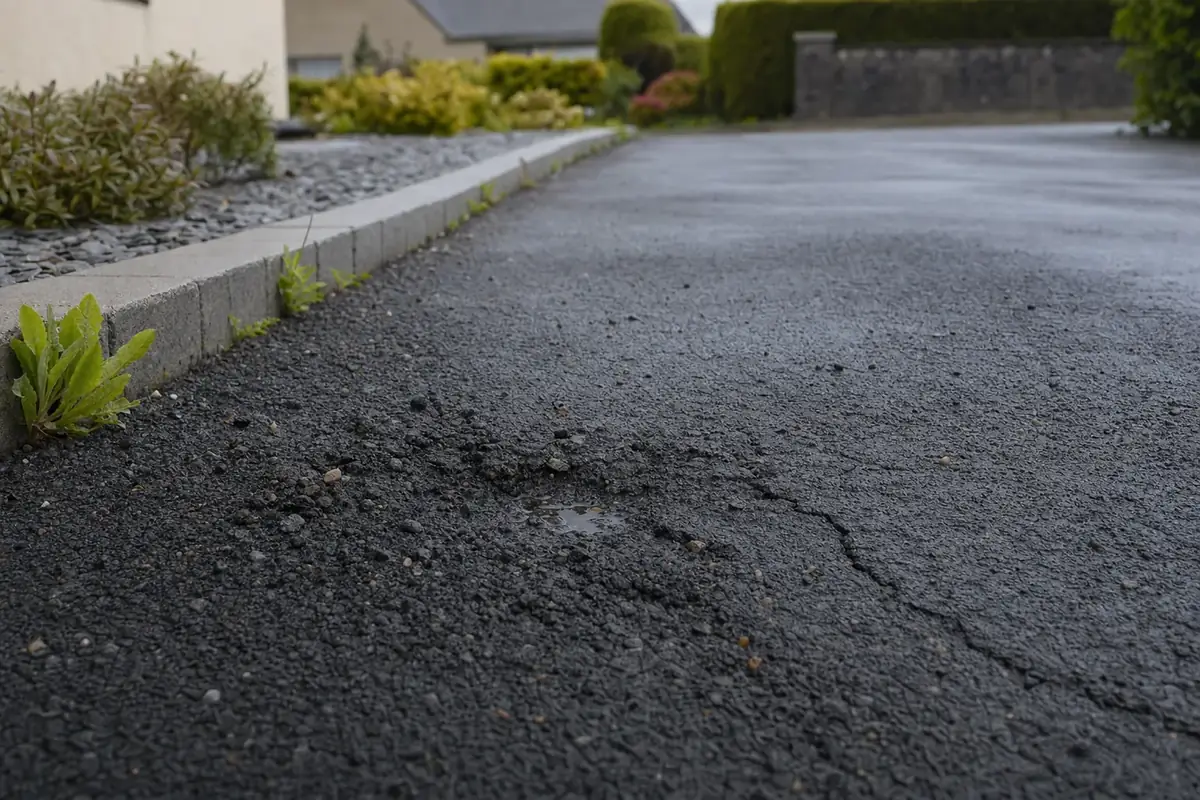
Other common culprits are petrol, diesel and oil, which dissolve the bitumen and leave soft, pitted patches, and tree roots lifting and cracking the surface from below. If you are seeing any of this, it is worth getting it looked at early, before water turns a small crack into a big repair.
Can a cracked tarmac driveway be repaired, or does it need replacing?
Small, isolated cracks and potholes can usually be patched or the surface overlaid without a full replacement. If the cracking is widespread, the driveway is sinking, or the base has failed, resurfacing over the top will not last and a proper dig out and rebuild is the better spend. A site visit is the only way to tell which camp yours is in.
Can you seal a tarmac driveway, and is it worth it?
Yes, you can seal a tarmac driveway, and for most driveways it is worth it, because a sealant restores the deep black colour, binds loose surface stones and protects against water, UV and fuel. Most tarmac benefits from resealing every 3 to 5 years.
A tarmac sealant is a coating that soaks into and sits on the surface, bringing back the black colour and adding a layer of protection against rain, UV, fuel and general wear. It also helps bind loose surface stones and slows the drying out that leads to crumbling.
Timing matters. New tarmac is usually left to cure and harden for several months, often around six to twelve, before its first seal, because it needs to release its oils first. After that, resealing every 3 to 5 years keeps it protected and looking fresh, though an exposed or heavily used driveway may want it sooner.
In South Wales, sealing earns its keep. With our rainfall and the salt and UV on coastal driveways in Penarth, Barry and Porthcawl, a sealed surface sheds water better and fades more slowly. It is not essential, and a well laid driveway will survive without it, but it is a low cost way to add years and keep the kerb appeal.
One word of caution: sealing is only worth doing on a sound surface. There is no point sealing over a driveway that is already crumbling or cracked, because the problem underneath will keep going. Fix the surface first, then seal.
How do you look after a tarmac driveway through a South Wales winter?
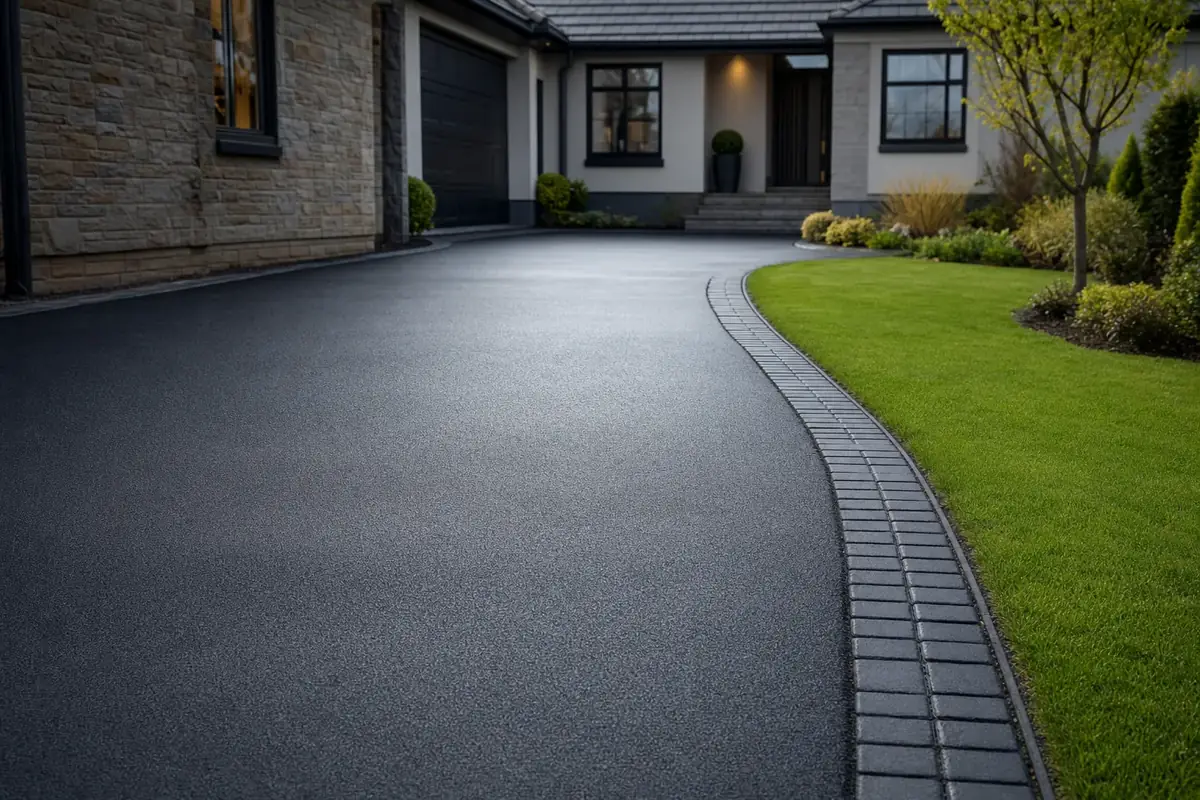
To protect tarmac through a South Wales winter, keep water draining away, clear leaves and moss, avoid metal snow shovels and heavy rock salt, and repair small cracks before frost gets into them. Good drainage is the single most important thing.
The most important winter job is keeping water moving off the driveway. Standing water is what does the damage, because it soaks in and then freezes, and the freeze and thaw cycle prises cracks open. Keep gullies and channels clear, and make sure leaves are not damming up the low spots.
Go easy on rock salt and never use a metal spade to clear snow. Heavy doses of salt can attack the surface over time, and a metal blade gouges and lifts the tarmac. A plastic snow shovel and a light hand with grit does the job without wrecking the finish.
Keep on top of moss and algae too, which love our damp South Wales winters and make a surface slippery. A stiff brush and a gentle driveway-safe cleaner is better than a heavy pressure wash, which can blast out the surface stones and the fines between them if you get too close.
Finally, sort small cracks before winter really bites. A tiny crack in November lets water in, freezes, and comes out a much bigger crack by March. A quick repair in autumn is far cheaper than a big one in spring.
Is tarmac a good choice for long or sloped driveways in the Valleys?
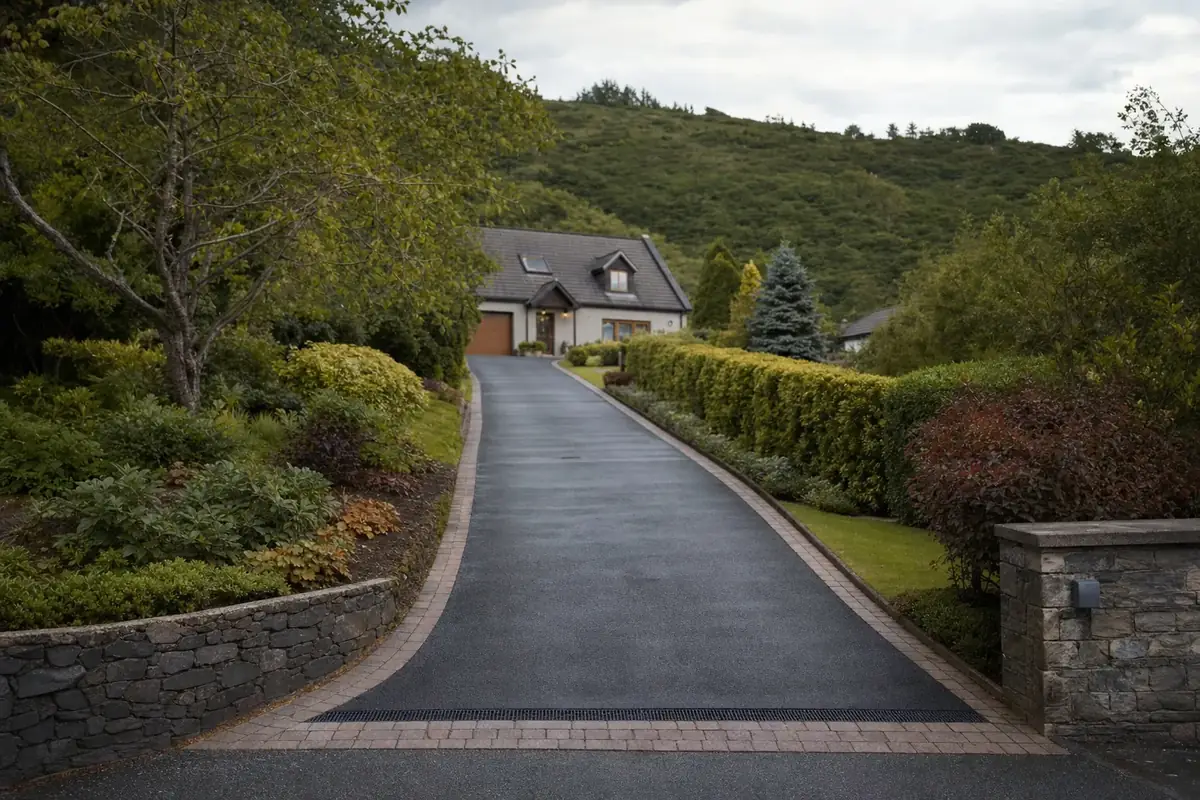
Yes, tarmac is one of the best choices for long or sloped driveways in the Valleys. It is cost effective over large areas, gives good grip, and is laid as one continuous surface that can follow slopes and bends more easily than block paving or slabs.
Tarmac is cost effective over a large area, it is laid as a continuous surface so there are no joints to work loose on a slope, and a well finished tarmac surface gives good grip underfoot and under tyre. That is part of why you see so much of it up through the Valleys and around Caerphilly.
On a slope, the details matter more than usual. Water runs faster downhill, so drainage at the bottom, and often a channel across the drive, is needed to stop water sheeting onto the road or into the garage. The tarmac mix and the edges also need to suit the gradient so nothing creeps downhill over the years.
For a long driveway, tarmac's lower cost per square metre really adds up compared with block paving or resin, and it can be laid to follow bends and changes in level in one run. If you are up in the Valleys or anywhere with a steep or long approach, it is well worth getting tarmac priced against the alternatives.
Whatever the shape of your plot, the same rule holds: the base and the drainage decide how long it lasts. We are happy to come out across Cardiff, Caerphilly, the Vale of Glamorgan and the wider South Wales area for a free, no-obligation site visit, to look at awkward or sloping sites and tell you honestly what will work.
Not sure if yours needs a repair or a full replacement?
Book a free site visit and we will give you a straight answer, backed by our 25-year guarantee and 35 years working with Cardiff and South Wales ground conditions.
Book a free site visit Call 07494 065997Frequently asked questions
Can you lay new tarmac over an existing driveway?
Often, yes. If the existing surface is sound and drains properly, a fresh layer of tarmac can be laid over the top, which is quicker and cheaper than a full rebuild. If the old base has failed or water sits on it, overlaying will not last and the driveway is better dug out and rebuilt. A site visit tells us which is right for yours.
How soon can I drive on a new tarmac driveway?
You can usually walk on it within a few hours and drive on it after about 2 to 3 days, once it has cooled and hardened. For the first few weeks it is best to avoid turning the steering wheel while stationary, parking in the exact same spot, or dropping heavy loads on it, and to keep it clear during the first hot spell as it fully firms up.
Does a tarmac driveway need planning permission in Wales?
A front driveway of more than five square metres that is impermeable and drains to the road or pavement needs planning permission in Wales. A permeable surface, or one draining to a border, lawn or soakaway, usually does not. Cardiff also has a number of conservation areas, and some of these, along with parts of Penarth, carry Article 4 directions that can remove permitted development rights, so always confirm with your local council for your specific property.
How do I get rid of weeds and moss on a tarmac driveway?
Pull or brush out weeds as they appear and treat moss with a driveway-safe cleaner and a stiff brush rather than a fierce pressure washer. Weeds usually take hold at the edges and in any cracks, so keeping the border tidy and sealing small cracks stops them getting a foothold in the first place.
Does tarmac come in different colours?
Standard tarmac is black, but it also comes in colours, with red being the most common choice, often used for a border or the whole drive. Coloured tarmac costs a bit more than plain black, and any colour will soften slightly with age, which sealing can help refresh.
Is tarmac or resin better for a wet, shaded driveway?
For a driveway that stays wet and shaded, resin bound often has the edge because it is permeable and drains through rather than holding surface water. Tarmac can work well too if it is laid with good falls and proper drainage. The best answer depends on the site, which is why we are happy to come and look before you decide.
More guides you might find useful

Do I Need Planning Permission for a Retaining Wall in Wales?
Most advice on retaining walls quotes English rules. Here is the Welsh guidance, the Highways Act control for walls near the street, when you need an engineer, why walls bulge, what they cost and who is responsible when a wall sits between two gardens.
Read the guide
Why Does My Driveway Flood Every Time It Rains?
Met Office averages put Cardiff at roughly 1,200 mm of rain a year, and the wettest months are exactly when drives flood. Here is how we diagnose standing water on site, the fall a drive should have, why soakaways struggle on local clay, what Wales requires, and what a fix costs.
Read the guide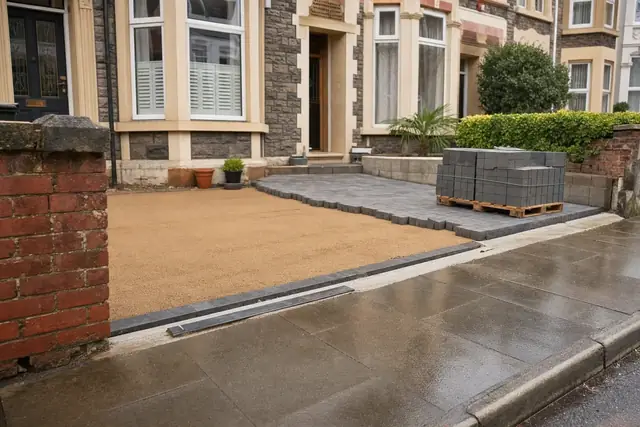
Do I Need Planning Permission for a Driveway in Wales?
Most driveways in Wales need no planning permission at all, as long as you get the surface and the drainage right. Here is how the five square metre rule, soakaways and dropped kerbs actually work in Cardiff.
Read the guide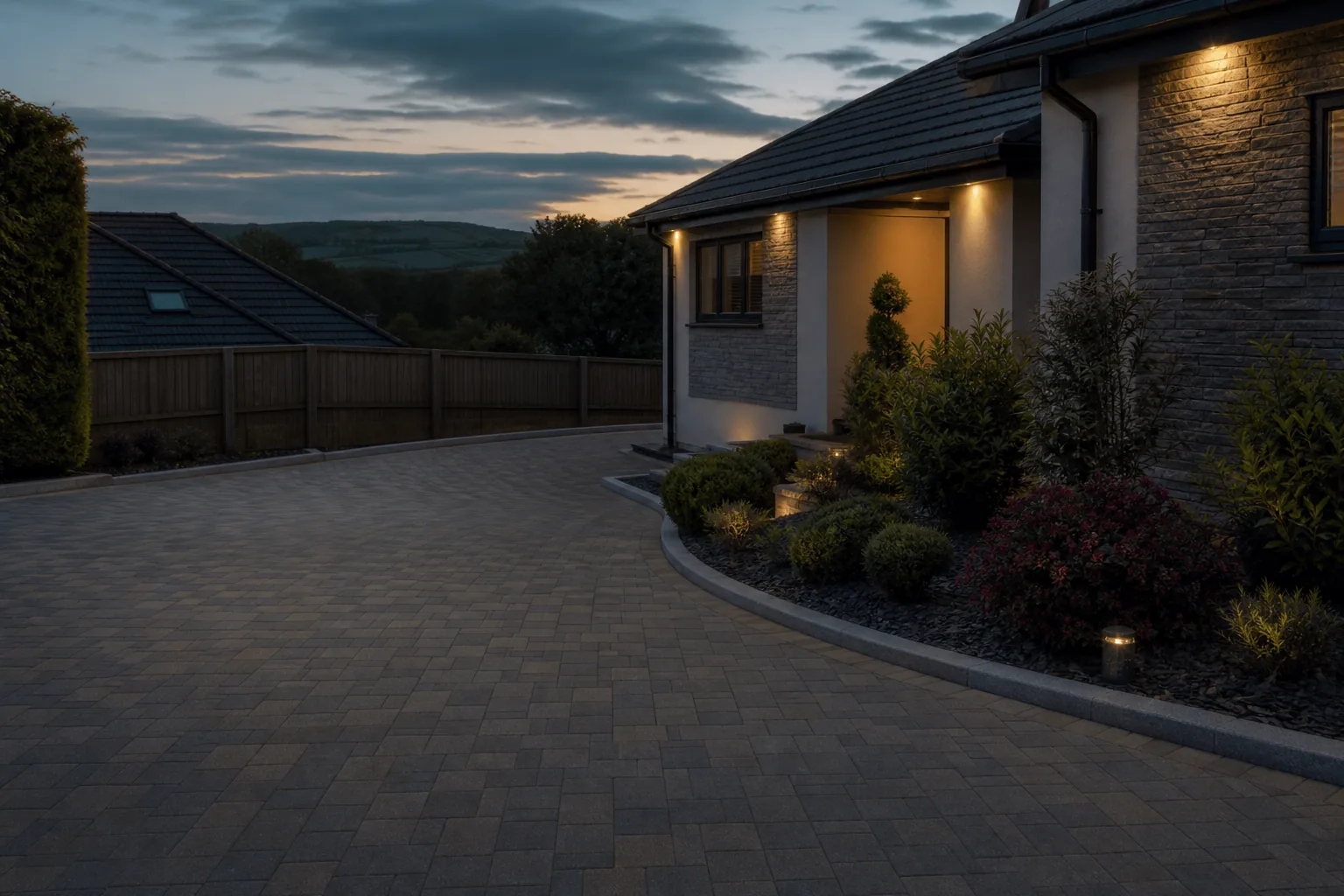
Ready to transform your driveway?
Free quotes, a 25-year guarantee, and a team that turns up when they say they will.